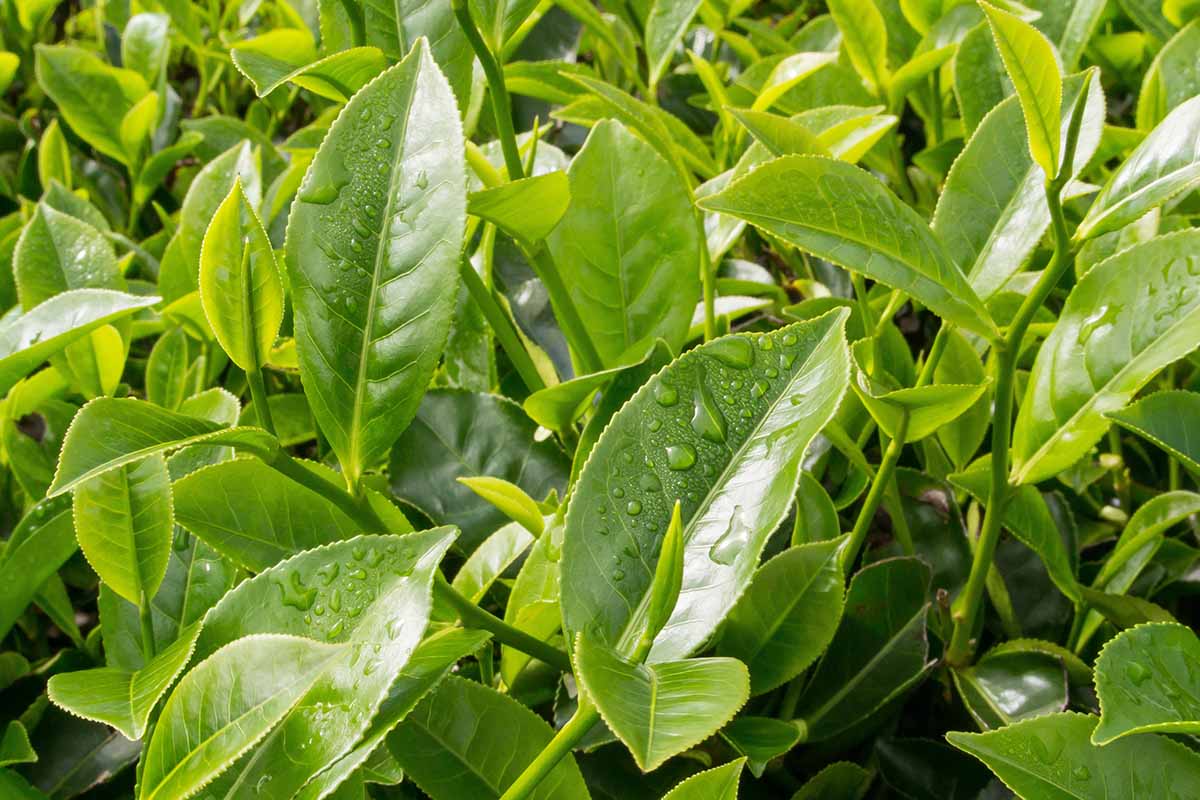
Growing Tea in the Pacific Northwest
Insect Pests of Tea Plants
Authors: McKenzie Shelton, Louis Nottingham, Jessica Weaver, Carol Miles
Affiliation: Washington State University, Northwestern Washington Research and Extension Center, Mount Vernon
Summary
Tea (Camellia sinensis) production is just beginning in the Pacific Northwest, and for production to expand, growers, nurseries, and homeowners need to know of potential insect pests and diseases, and how to control them. Field surveys performed in the summer and autumn of 2025 of two tea plantings in northwest Washington, where no pest management applications were made in the preceding year, found small numbers of scales, spider mites, aphids, leafhoppers, and thrips on tea plants. Natural predators, including predatory mites, parasitoid wasps, lacewings, dance flies, and ladybeetles, were also found during the survey. No diseases were found in the survey. Findings from this one-year survey suggest that growing tea in northwest Washington is likely to have low risk from insect pests and diseases; however, plants should be monitored regularly.
Introduction
As interest in tea production is gaining popularity in the Pacific Northwest, there is a need for information regarding insect pests and diseases that may impact the crop. There is a potential for pest infestation through importation of plant material from other regions in the U.S. and other countries. A changing climate may also make the Pacific Northwest more climatically suitable for pests that were previously restricted to tropical and subtropical regions. The information provided through this survey will enable growers, nurseries, homeowners, and agricultural professionals to make informed decisions when growing tea in this region, as well as determine potential future needs for pest management options.
Methods
A field survey was carried out at two locations in northwest Washington to assess the incidence of insect pests and diseases on tea plants in Skagit County, Washington. The two field survey locations were the Washington State University Northwestern Washington Research and Extension Center (WSU NWREC) in Mount Vernon, WA and a private garden in Burlington, WA. The tea planting at WSU NWREC was about 0.05 ha total and includes three rows of 45 tea plants each of cvs. Minto Pacific and Fairhope, and plants were 4 to 6 years old. The private garden (total area 0.8 ha) in Burlington, WA, included a hedge row of 20 plants of cv. Minto Pacific planted in 1988, and 30 plants of various cultivars aged 4–26 years planted throughout the garden. Neither survey site was actively managed for insect pests or diseases in the year preceding this survey.
The surveys were performed on 26 June and 3 October at WSU NWREC, and on 14 July and 3 October in Burlington, WA. Surveys included three sampling approaches: observational, leaf brush, and vacuum. All insects were identified, counted, and classified as a pest or natural enemy based on historical information.
Survey Findings
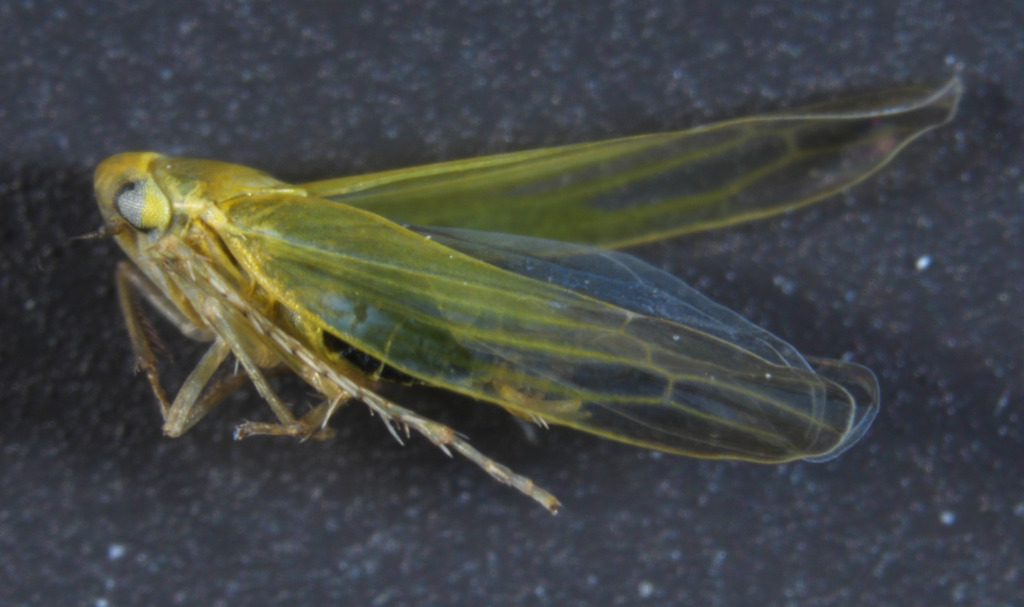
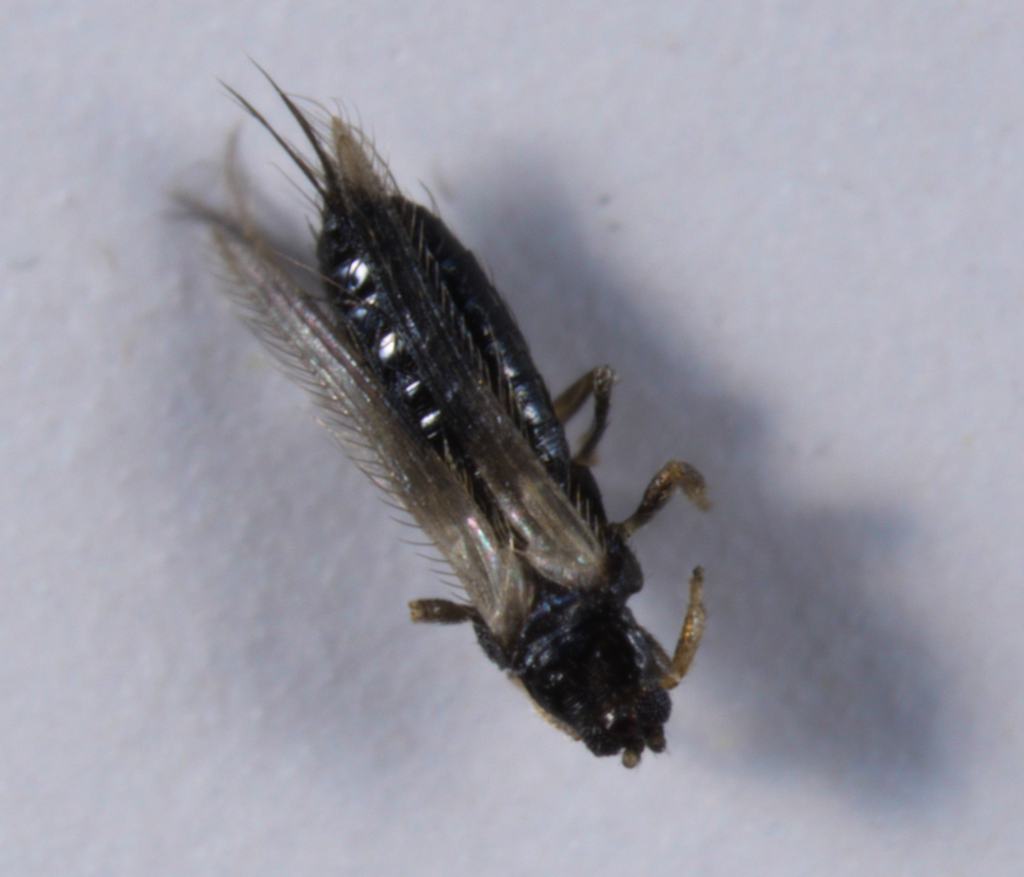
In northwest Washington we found only a few insect pests in the two field plantings. These included scale insects (Coccoidae), spider mites (Tetranychidae), aphids (Aphididae), leafhoppers (Cicadidae), and thrips (Thysanoptera). We did not classify these to the species level as this requires expert identification, and the purpose of this survey was to develop a general understanding of current pests in this region. Scale was the most common insect pest, followed by spider mites, aphids, leafhoppers, and only a single thrips was found. In the nearly 30 years that tea has been grown at the Burlington survey site, only cottony camellia scale has been reported as a pest.
The tea plants that were surveyed showed no obvious symptoms of stress from insect pests and no symptoms of disease, suggesting the pressure to be low. Several predatory insects were found in the surveys, indicative of some level of natural biological control. These natural predators included predatory mites (Bdellidae), parasitoid wasps (Hymenoptera), lacewings (Chrysopidae and/or Hemerobiidae), dance flies (Hybotidae), and ladybeetles (Coccinellidae). These predatory arthropods can assist in controlling pest populations in the field.
Overview of Insect Pests of Tea Found in Northwestern Washington Survey
The following information includes general signs, symptoms, and management options for the insect pests found in our survey provided. To optimize natural predators, avoid using broad spectrum insecticides and miticides.
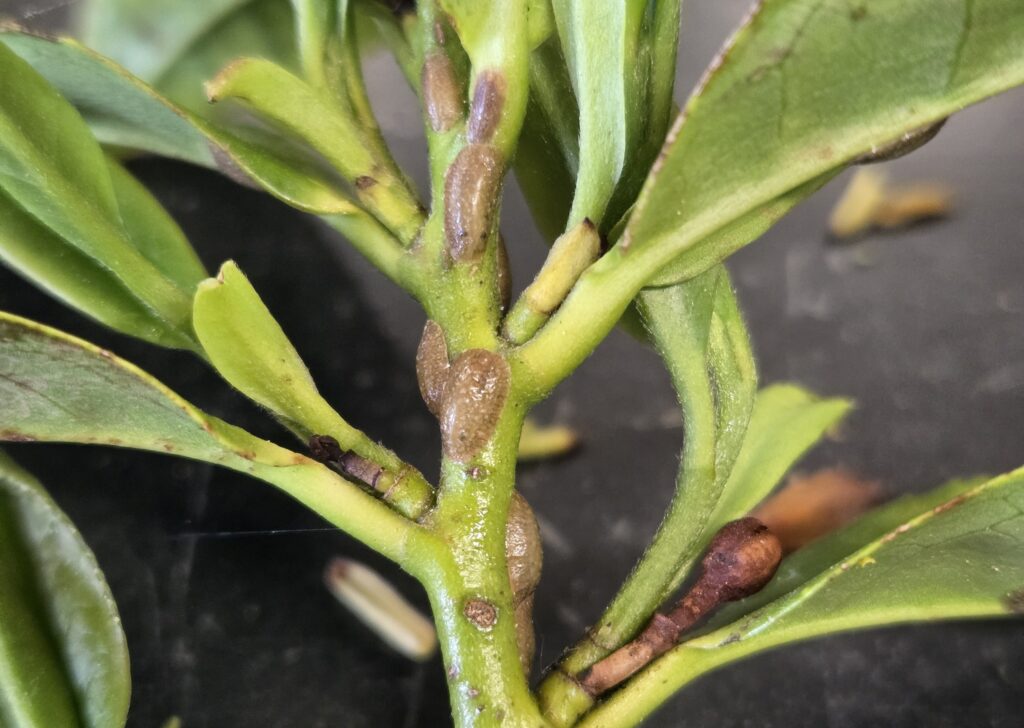
Cottony Camellia Scale
Distribution
Cottony camellia scales are native to Asia and are commonly found throughout the United States. Nurseries in the Pacific Northwest have noted significant presence of cottony camellia scale, with many recorded outbreaks in the north Willamette Valley. A 2-ha tea planting in northwest Washington had a high infestation of this insect pest in 2008.
Signs and Symptoms
Immature cottony camellia scales, commonly known as crawlers, feed on sap from stems and leaves of their host by inserting a stylet into the phloem cells. Crawlers can be found most often on the undersides of leaves on the leaf veins. Scales excrete honeydew that can result in the growth of black sooty mold (most commonly caused by Cladosporium and Alternaria spp.). The feeding of a large population of scales can weaken a host plant, but small populations will often go unnoticed. Feeding by cottony camellia scales occasionally leads to yellowing of affected leaves.
Management
Remove cottony camellia scales and their egg masses by gently scraping or scrubbing plant stems, leaves, and leaf axils. Insecticidal soap and horticultural oils can be applied to the insects to control pest populations. Cottony camellia scale may be partially controlled by predators in outdoor settings. Parasitoid wasps, lacewings, predatory mites, and ladybeetles are common biological controls applied to manage scale species.
Spider Mites
Distribution
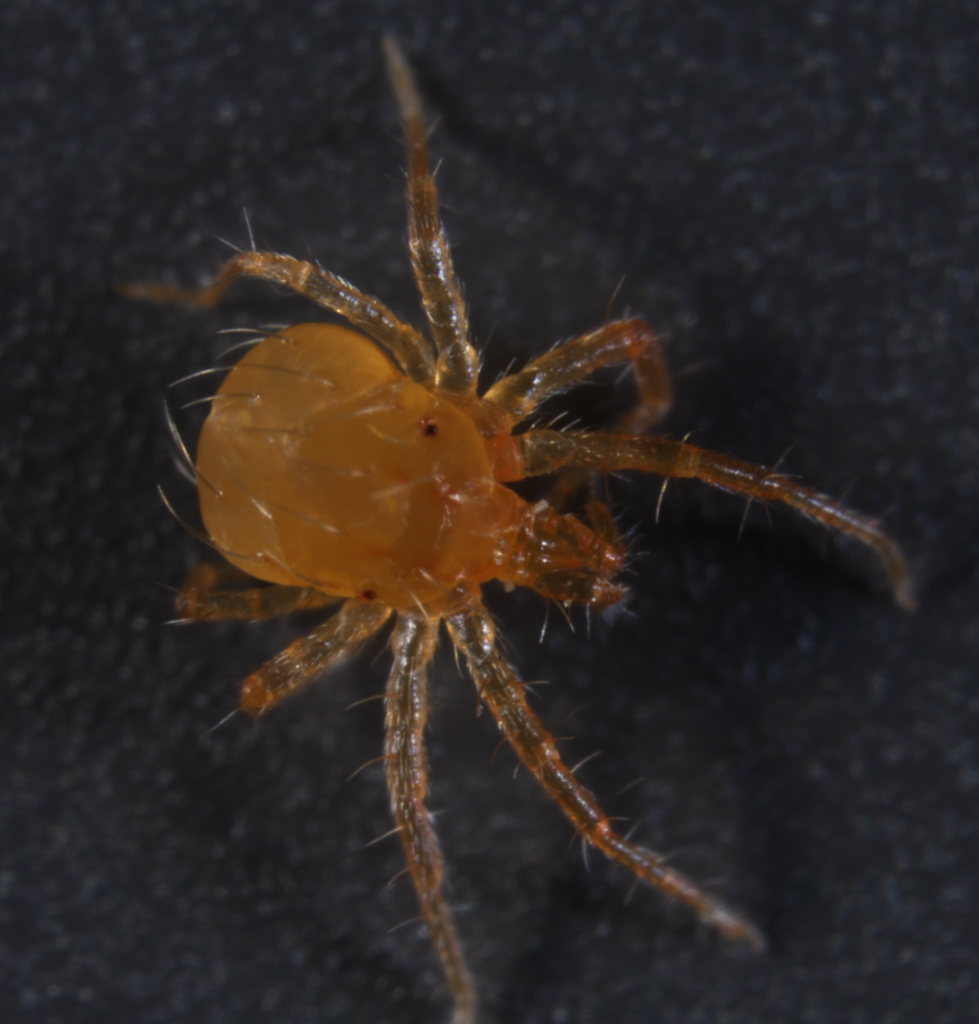
Spider mites (order Acari, family Tetranychidae) are common in major tea growing regions and within the United States, especially the broad mite (Polyphagotarsonemus latus) and kanzawa spider mite (Tetranychus kanzawai). The southern red spider mite (Oligonychus ilicis) affects other Camellia spp. in the United States and was found on tea plants in a greenhouse at WSU NWREC in February 2025.
Signs and Symptoms
Spider mites create dense webbing over leaves, and they use the webbing to move and protect themselves as well as their eggs from predators and pesticides. Spider mites tend to reside on the undersides of leaves and feed using a stylet that pierces the epidermis of plant tissue. Leaf bronzing is a common symptom on mite-affected leaves, and in severe cases leads to leaf drop and plant death.
Management
Avoid creating dusty conditions around the tea plants. Scout for mites on plants more frequently during hot and dry weather conditions. Use strong water sprays to knock the mites off plants and to remove webbing and egg masses. Insecticidal soap and horticultural oils can be applied to the insects to control pest populations. Predatory mites, predatory thrips, ladybeetles, and minute pirate bugs (Orius spp.) can be used to manage spider mites.
Aphids
Distribution
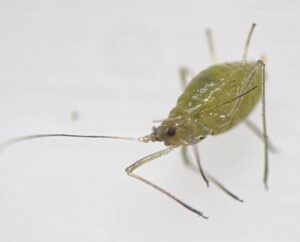
Aphids are a common pest of many agricultural crops including tea. The black citrus aphid (Toxoptera aurantii) is a tropical and subtropical species affecting tea in primary growing regions and is also present in the southeast and west coast of the United States.
Signs and Symptoms
Aphids feed on the phloem of stems, leaves, and roots, using a “sucking beak,” and are known to transmit plant viruses. Feeding from an aphid infestation can result in plant chlorosis, distorted leaves, and reduced plant vigor. Aphids shed their exoskeletons, which are often white in color and observed on infested plants.
Management
Use moderate levels of nitrogen fertilizer to reduce aphid activity. Spray leaves with strong streams of water to dislodge aphids, and squishing aphids by hand. Reflective mulch around the base of tea plants can deter aphids. Insecticidal soap, kaolin clay, and horticultural oils can be applied to the insects to control pest populations. Natural predators of aphids include aphid midges (Aphidoletes aphidimyza), brown and green lacewings (Hemerobiidae and Chrysopidae, respectively), ladybeetles, minute pirate bugs, and parasitoid wasps.
Leafhoppers
Distribution
Leafhoppers have a wide host range, including many herbaceous and woody ornamentals, and fruit and vegetable crops. The green or tea leafhopper (Empoasca flavescens) occurs commonly in tea growing regions of the world and also has a presence in the United States.
Signs and Symptoms
Leafhoppers feed on the xylem, phloem, or parenchyma of plants, causing injury to vegetation and acting as a potential vector for plant pathogens. Leafhopper feeding can cause a white stippled appearance on leaves. Leafhoppers lay eggs within plant tissue, which can lead to some mechanical damage.
Management
Reflective mulch and/or row covers can prevent leafhoppers from infesting the crop. Kaolin clay applied to the insect on the crop can provide some control. Biological control includes ladybeetles, lacewings, damsel bugs (Nabis spp.), spiders (Araneae), and parasitoid wasps. Natural predators, such as parasitoid wasps, may be released as biocontrol agents in greenhouses and nurseries; however, this may not be adequate for reducing leafhopper populations.
Thrips
Distribution
The thrips species that impacts tea is Scirtothrips dorsalis and is present in the United States.
Signs and Symptoms
Thrips feed on leaf tissue with piercing and sucking mouth parts. Thrips feeding can scar plant tissue and disfigure growing plant parts, particularly leaves and shoots. Stippling, leaf drop, bronzing, and browning are other common symptoms of feeding. Thrips can also vector plant pathogens and viruses.
Management
Pruning, row covers, and/or reflective mulch may decrease thrips populations. Biological control includes predatory thrips, minute pirate bugs, and lacewing larvae.
Conclusion
Western Washington has a suitable climate for tea production, and plantings may experience insect pests and diseases over time. In our survey we found only a few scales, spider mites, aphids, leafhoppers, and thrips as well as some predatory mites, parasitoid wasps, lacewings, ladybeetles, and dance flies. As climate change progresses and more tea is grown in the region, pest incidence and severity may increase.
Tea growers should regularly scout their plantings for signs and symptoms of pest infestations and disease. Early identification of potential issues will help decrease crop damage and allow for efficient information sharing among growers and researchers as tea production expands in western Washington.
References
Agyenim-Boateng KG, Lu JN, Shi YZ, Yin XG. 2018. Review of leafhopper (Empoasca flavescens): A major pest in castor (Ricinus communis). HSOA J Genet Genom Sci 3(1):1–7. http://dx.doi.org/10.24966/GGS-2485/100009.
Ananthakrishnan TN. 1984. Diversity spectrum and damage potential, p 7–22. In: Ananthakrishnan TN (ed). Bioecology of thrips. Indira Publishing House, Oak Park, Michigan, USA.
Baker J. 2024. Cottony camellia scale insect. NC State Extension, North Carolina State University. https://content.ces.ncsu.edu/cottony-camellia-scale-1#section_heading_3471. [accessed 29 Dec 2025].
Banks N. 1904. Class III, Arachnida, Order I, Acarina, Four new species of injurious mites. J NY Entomol Soc. 12:53–56.
Bebber DP, Ramotowski MAT, Gurr SJ. 2013. Crop pests and pathogens move polewards in a warming world. Nature Clim Change. 3(11):985–988. https://doi.org/10.1038/nclimate1990.
Bethke JA, Dreistadt SH, Varela LG. 2014. Thrips. UC ANR Publication 7429. University of California Integrated Pest Management Program, University of California. https://ipm.ucanr.edu/PMG/PESTNOTES/pn7429.html?src=302-www&fr=4564. [accessed 9 Dec 2025].
Carver M. 1978. The black citrus aphids, Toxoptera citricidus (Kirkaldy) and T. Aurantii (Boyer de Fonscolombe) (Homoptera: Aphididae). Aust J Entomol. 17(3):263–270. https://doi.org/10.1111/j.1440-6055.1978.tb00156.x.
Chen Z, Luo Z. 2025. Management of insect pests on tea plantations: Safety, sustainability, and efficiency. Annu Rev Entomol. 70:359–377. https://doi.org/10.1146/annurev-ento-013024-014757.
Cranshaw WS, Sclar DC. 2025. Spider mites. Colorado State University Extension. https://extension.colostate.edu/resource/spider-mites/. [accessed 8 Dec 2025].
Deitz LL, Dietrich CH, McKamey SH, Rakitov TA, Southern PS, Balme GR, Alvarez PA. 2008. Leafhoppers (Superfamily Membracoidea: Cicadellidae and Myerslopiidae). NC State University Libraries, North Carolina State University. https://www.lib.ncsu.edu/specialcollections/digital/metcalf/leafhoppers.html. [accessed 31 Dec 2025].
Denmark HA. 1980. Broad mite, Polyphagotarsonemus latus (Banks) (Acarina: Tarsonemidae) on Pittosporum. Florida Department of Agriculture and Consumer Services, Division of Plant Industry. Entomol Circular no. 213.
Forest Protection Service. 2025. Pulvinaria floccifera – Cottony camellia scale. Forest Pests Europe. https://www.forestpests.eu/pest/pulvinaria-floccifera [accessed 17 Oct 2025].
Gautam SG, Grafton-Cardwell EE, Morse JG, Haviland DR, Faber BA, Rivera MJR, Cass BN, Cohen H, Daugherty MPD, Hoddle MS. 2025. Kanzawa spider mite (Hydrangea mite) – Tetranychus kanzawai. University of California Integrated Pest Management. https://ipm.ucanr.edu/agriculture/citrus/kanzawa-spider-mite-hydrangea-mite/#gsc.tab=0 [accessed 16 Dec 2025].
Godfrey LD. 2011. Spider mites. University of California Integrated Pest Management Program. UC ANR Publication 7405. https://ipm.ucanr.edu/home-and-landscape/spider-mites/. [accessed 8 Dec 2025].
Hodges A, Ludwig S, Osborne L, et al. 2009. Pest thrips of the United States: Field identification guide. University of Florida Institute of Food and Agricultural Sciences.
Hortsense. 2025a. Camellia: Cottony camellia scale. WSU CAHNRS and WSU Extension. https://hortsense.cahnrs.wsu.edu/fact-sheet/camellia-cottony-camellia-scale/. [accessed 30 Dec 2025].
Kabashima JN, Dreistadt SH. 2014. Scales. UC ANR Publication 7408. University of California Integrated Pest Management Program. https://ipm.ucanr.edu/PMG/PESTNOTES/pn7408.html. [accessed 17 Oct 2025].
Kaur N. 2025a. Camellia (Camellia) – Cottony camellia scale. Pacific Northwest Insect Management Handbook. Oregon State University. https://pnwhandbooks.org/node/6805. [accessed 30 Dec 2025].
Kaur N. 2025b. Landscape pests – Leafhopper. Pacific Northwest Insect Management Handbook. Oregon State University. https://pnwhandbooks.org/node/6730/print. [accessed 9 Dec 2025].
Kaur N. 2025c. Nursery crop pests – Spider mite. Pacific Northwest Insect Management Handbook. Oregon State University. https://pnwhandbooks.org/node/7103/print. [accessed 8 Dec 2025].
Kenis M, Li H, Fan J, Courtial B, Auger-Rozenberg M-A, Yart A, Eschen R, Roques A. 2018. Sentinel nurseries to assess the phytosanitary risks from insect pests on importations of live plants. Sci Rep. 8(1):11217. https://doi.org/10.1038/s41598-018-29551-y.
Koschier EH, Sedy KA, Novak J. 2002. Influence of plant volatiles on feeding damage caused by the onion thrips Thrips tabaci. Crop Prot. 21(5):419–425. https://doi.org/10.1016/S0261-2194(01)00124-7.
Jeppson LR, Keifer HH, Baker EW. 1975. Mites injurious to economic plants (1st ed). University of California Press, Berkeley, California, USA.
Liebhold AM, Brockerhoff EG, Garrett LJ, Park JL, Britton KO. 2012. Live plant imports: the major pathway for forest insect and pathogen invasions of the US. Front Ecol Environ. 10(3): 135-143. 10:134–143. https://doi.org/10.1890/110198.
Ma C-S, Wang B-X, Wang X-J, Lin Q-C, Zhang W, Yang X-F, van Baaren J, Bebber DP, Eigenbrode SD, Zalucki MP, Zeng J, Ma G. 2025. Crop pest responses to global changes in climate and land management. Nat Rev Earth Environ. 6(4):264–283. https://doi.org/10.1038/s43017-025-00652-3.
Mahr S. n.d. Aphids, in-depth. Division of Extension, University of Wisconsin-Madison. https://hort.extension.wisc.edu/articles/aphids-2/. [accessed 10 Dec 2025].
Podsiadlowski L. 2016. Phylogeny of the aphids, p 1–13. In: Vilcinskas A (ed). Biology and ecology of aphids. CRC Press, Boca Raton, Florida, USA.
Potter MF. 2008. Spider mites on landscape plants. ENTFACT-438. University of Kentucky Department of Entomology. https://entomology.mgcafe.uky.edu/ef438. [accessed 29 Nov 2025].
Rosetta RL. 2017. Cottony camellia scale. Oregon State University. https://agsci.oregonstate.edu/nurspest/insects/cottony-camellia-scale. [accessed 30 Dec 2025].
Sorenson JT. 2003. Aphids, p 105–115. In: Resh VH, Carde RT (eds). Encyclopedia of Insects. Academic Press, Elsevier Science & Technology, USA.
Stoetzel MB. 1994. Aphids (Homoptera: Aphididae) of potential importance on Citrus in the United States with illustrated keys to species. Proc Entomol Soc Washington. 96:74–90.
Talabac M. 2023. Cottony camellia scale. University of Maryland Extension. https://extension.umd.edu/resource/cottony-camellia-scale/. [accessed 30 Dec 2025].
Talabac M. 2024. Introduction to scale insects. University of Maryland Extension. https://extension.umd.edu/resource/introduction-scale-insects/. [accessed 30 Dec 2025].
Terry I, Beers EH, Cockfield S. 2007. Western flower thrips. WSU Tree Fruit, Washington State University. https://treefruit.wsu.edu/crop-protection/opm/western-flower-thrips/. [accessed 9 Dec 2025].
Tjosvold SA, Redak RA, Dreistadt SH, Wilen CA. 2022. Leafhoppers and sharpshooters. UC ANR Publication 3392. University of California Integrated Pest Management Program, University of California. https://ipm.ucanr.edu/agriculture/floriculture-and-ornamental-nurseries/leafhoppers-and-sharpshooters/#gsc.tab=0. [accessed 9 Dec 2025].
UPASI TRF (United Planter’s Association of Southern India Tea Research Foundation). n.d. Pests & diseases. The United Planters Association of Southern India, Tea Research Foundation. https://www.upasitearesearch.org/pests-diseases/. [accessed 10 Dec 2025].