Verticillium Wilt on Watermelons
Verticillium Wilt on Watermelons
Authors: Pinki Devi, Carol Miles
Affiliation: Washington State University, Northwestern Washington Research and Extension Center, Mount Vernon
September 2018
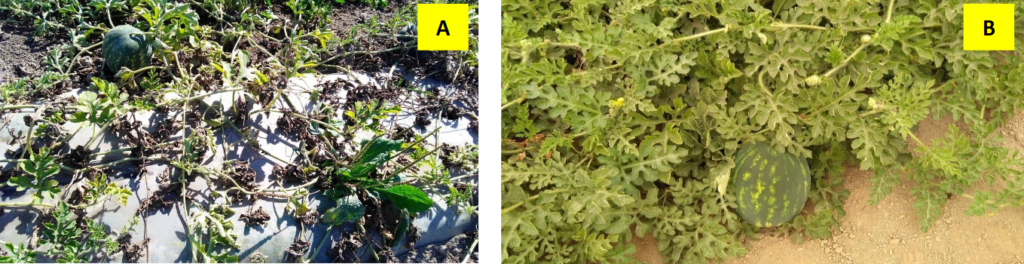
One of the economically damaging root diseases in Washington State is verticillium wilt, which impacts the yield of watermelon (Fig. 1) as well as many other crops. This disease is favored by moist soil with a temperature range of 21-27 °C (70-81 °F). Symptoms may not develop until the plant is bearing flowers or fruit, and are often more severe after fruit set or when soil is dry.
Pathogen
Verticillium wilt is caused by the soilborne fungus Verticillium dahliae, which affects a wide range of over 400 different crops. The fungus forms survival structures called microsclerotia that can remain viable in the soil for up to 14 years depending on conditions such as temperature, drought, and crops in the field. The microsclerotia are stimulated to germinate by root exudates in a susceptible plant, resulting in hyphae that colonize the cortex of root tips or lateral roots, or invade the plant via root wounds. The pathogen spreads systemically throughout the entire plant as the pathogen colonization extends into the vascular system (xylem). Conidia (fungal spores) are formed and plug the xylem, which prevents water from reaching upper parts of the plant. As the disease progresses, the fungus then produces microsclerotia, which are released into the soil with the decomposition of plant material.
Symptoms
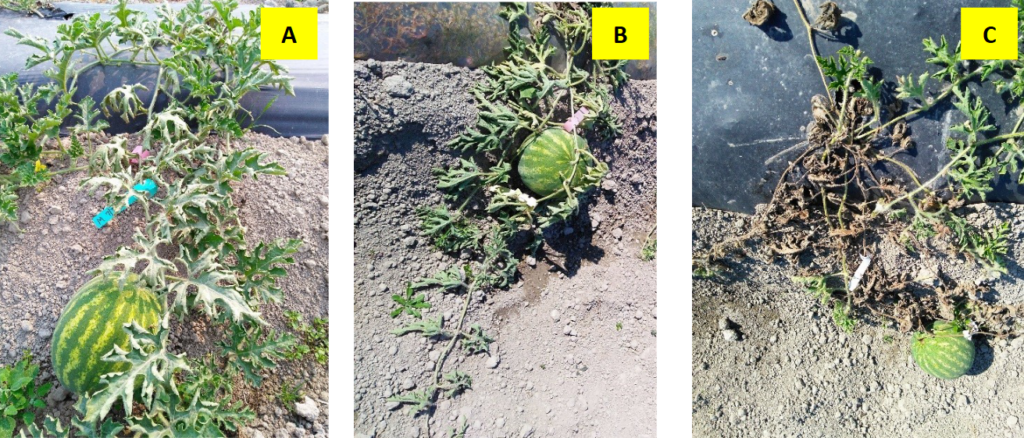
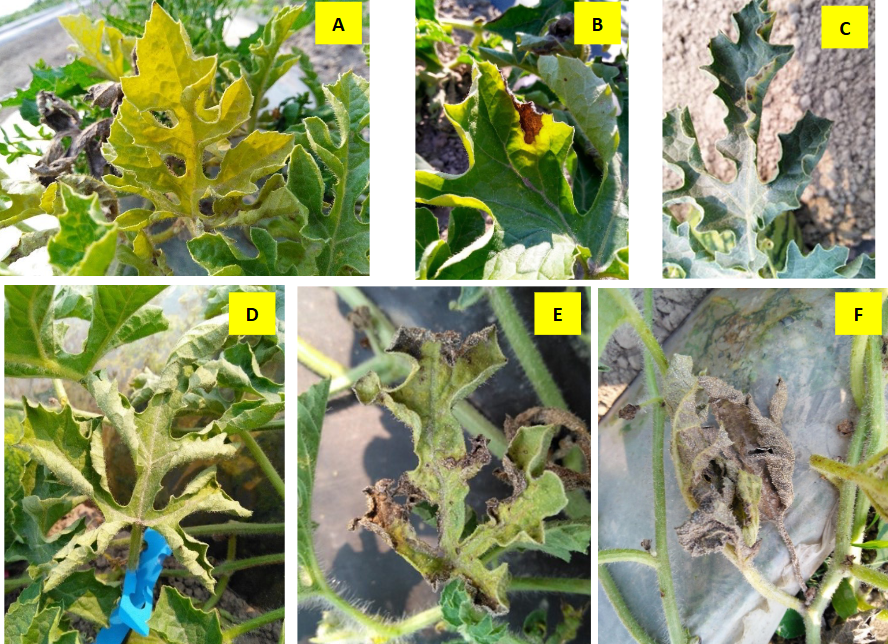
On watermelon, the plant remains symptomless after infection, but during flowering or fruiting, leaves and stems deprived of water and nutrients begin to exhibit symptoms of chlorosis (yellowing), curling, wilting, stunted and/or distorted growth, necrosis, and often times premature plant senescence (Fig. 2). Crown leaves initially wilt and develop ‘V’ shaped chlorotic lesions at the margins of older leaves, which eventually collapse and turn necrotic. Wilting may occur on only one side of a plant. The vascular tissue of infected plants becomes brown and discolored, causing the plant to wilt (Fig. 1A & 1B) and eventually die (Fig. 1C). In some cases,infected plants are not killed but are stunted and weak and produce undersized flowers or fruit. Watermelon plants can be infected in fields that have a long history of other cucurbits or solanaceous crops.
Control
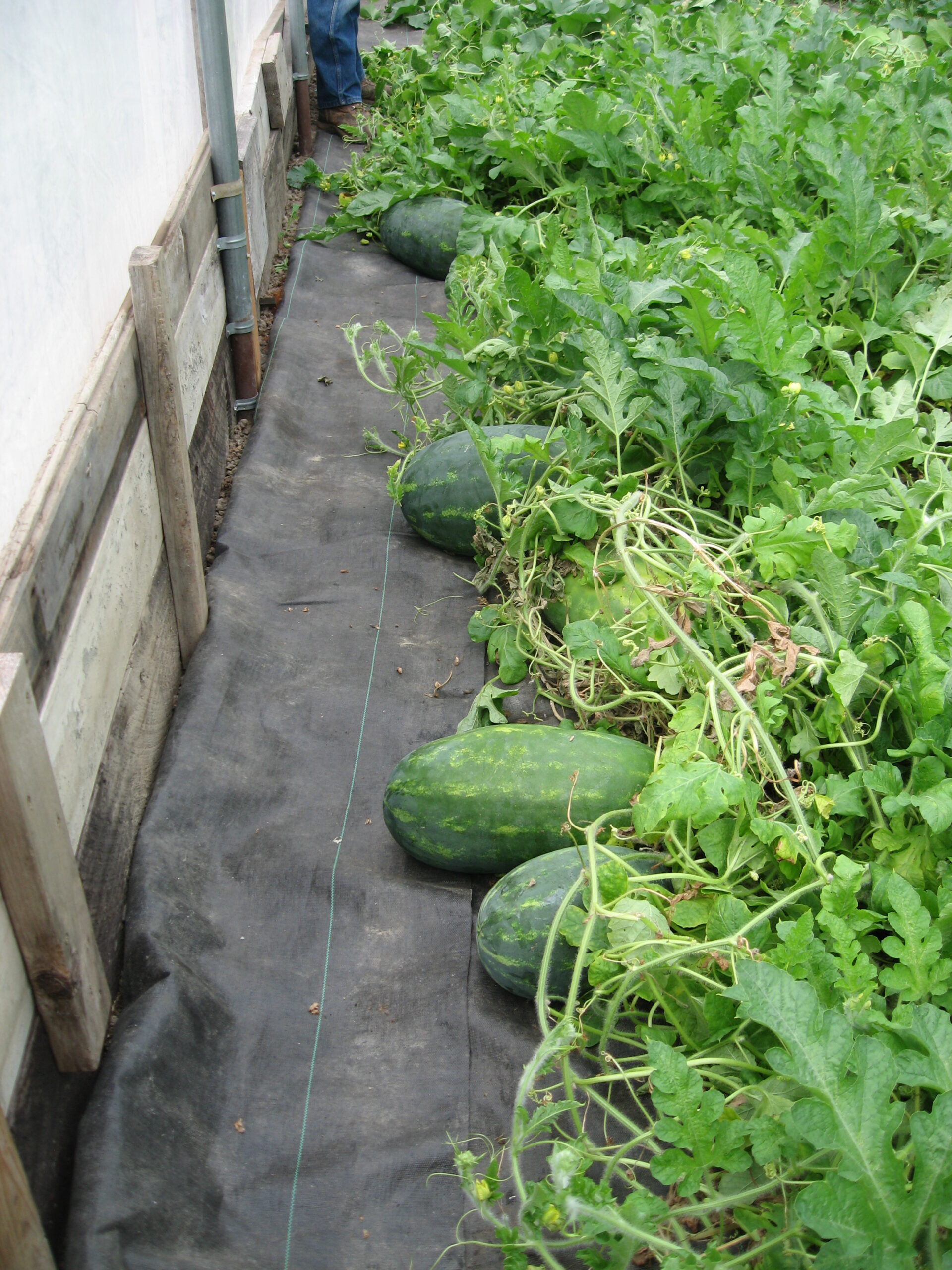
Currently, there are no commercial verticillium wilt resistant or tolerant watermelon cultivars available. There are no satisfactory controls for this disease once plants are infected. Soil fumigation provides some control; see the Pacific Northwest Disease Handbook for more information. Since Verticillium can be present in soil or crop debris, it is important to avoid moving soil or debris from infested areas. Grafting watermelon onto resistant cucurbit rootstock such as ‘Tetsukabuto’ squash is an effective management option (Fig. 3).