Growing Tea In
The Pacific Northwest
Tea Plant Propagation
Authors: Srijana Shrestha1, McKenzie Shelton2, Chakradhar Mattupalli2, and Carol Miles2
Affiliations: Oregon State University1, Washington State University2
Tea plants are most commonly propagated by cuttings. This guide provides a step-by-step process to propagate tea plants by cuttings for nursery growers, farmers, and home gardeners in western Washington or similar climatic regions.
Introduction
Tea made from leaves of Camellia sinensis (the tea plant) is the second most popular beverage in the world. Tea consumption is increasing in the United States due to increased awareness of its health benefits, interest in locally grown tea, and specialty tea beverages. The Pacific Northwest has a favorable temperate climate with adequate rainfall and acidic soils that make it well-suited for growing tea. This series of tea production guides will help home gardeners, small-scale growers, and nurseries propagate, establish and care for tea plants as well as make a finished tea product.
Propagation by Cuttings
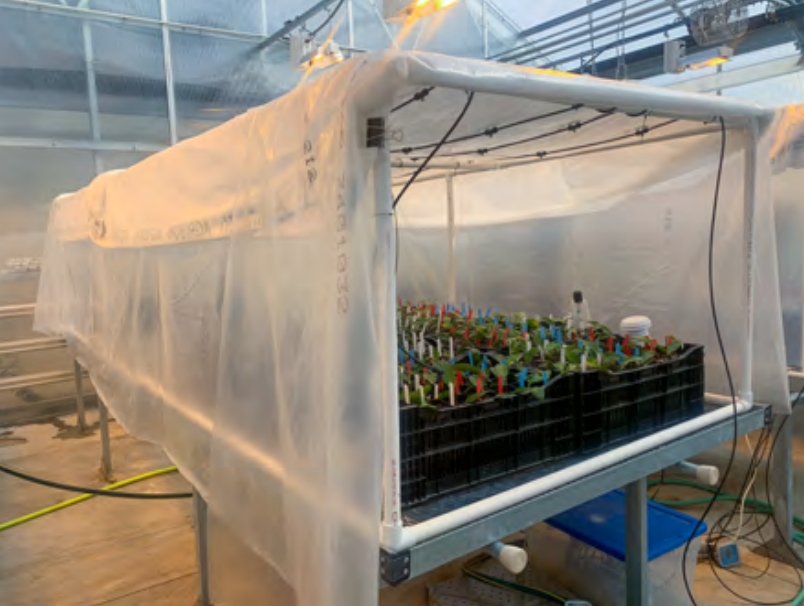
Tea (Camellia sinensis var. sinensis and C. sinensis var. assamica) plants are propagated on a commercial scale worldwide by cuttings. Vegetative propagation overcomes variability among plants that occurs with seed propagation. However, tea plants are difficult to root from cuttings. External factors such as light and temperature, and internal factors such as nutrition, age, plant hormonal balance, and physiological maturity of the plant material, all impact rooting success. This guide provides a step-by-step process to propagate tea plants by cuttings for nursery growers, farmers, and home gardeners in western Washington or similar climatic regions. This propagation method uses a mist chamber to root cuttings. A simple mist chamber (Fig. 1) can be constructed on a greenhouse bench as described at the end of the propagation directions. Potting medium and pots need to be prepared in advance. Product information is provided as examples and is not intended to endorse these products. Similar products that function the same can be used.
Selection of Mother Plants
The mother plants selected for cuttings should have healthy and robust branches, free from disease and insect damage, and good yield potential. This will ensure that plants grown from the cuttings will be healthy and have the same genetic characteristics as the mother plant. In general, tea plants reach this stage of maturity and can be used as mother plants in about 5 to 6 years. While plants that are 3 to 4 years old may produce enough shoots for cutting, plants should be large enough to survive winter cold shock after cuttings are collected in the Fall.
The selected mother plants should not be harvested for tea leaves, and they require a different pruning schedule from plants that are harvested for tea leaves. Mother plants should be pruned approximately 6 months before the collection of cuttings to ensure young shoots are present for cutting.
The fertilizer requirement of mother plants is almost twice that of plants of the same age that are harvested for tea leaves. In general, apply a slow-release fertilizer at about 100 – 150 lbs. N per acre every 1 – 2 years. Organic fertilizers, for example Nutri-Rich 8-2-4 (Stutzman Farms, Canby, OR), tend to release nutrients slowly.
Pots and Potting Medium
- Prepare the propagation medium beforehand by mixing peatmoss, vermiculite, and perlite in a 5:3:2 ratio by volume. This medium composition results in a pH of 4.5 – 5.0, which is ideal for tea plants. Add water to the potting medium so that it is saturated.
- Fill treepots (e.g., MT38BT, Stuewe and Sons, Tree Seedling Nursery Containers, Tangent, OR) with propagation medium. Allow excess water to drain out of the pot before placing the tea cuttings.
Step-by-Step Process for Collection and Handling of Tea Cuttings
A cutting is a small shoot or branch that is cut from the mother plant and can develop into a new plant.
- Harvest tea shoots from mother plants selected and managed for propagation.
- Harvest tea shoots from mother plants early in the morning or in the evening using pruning clippers.
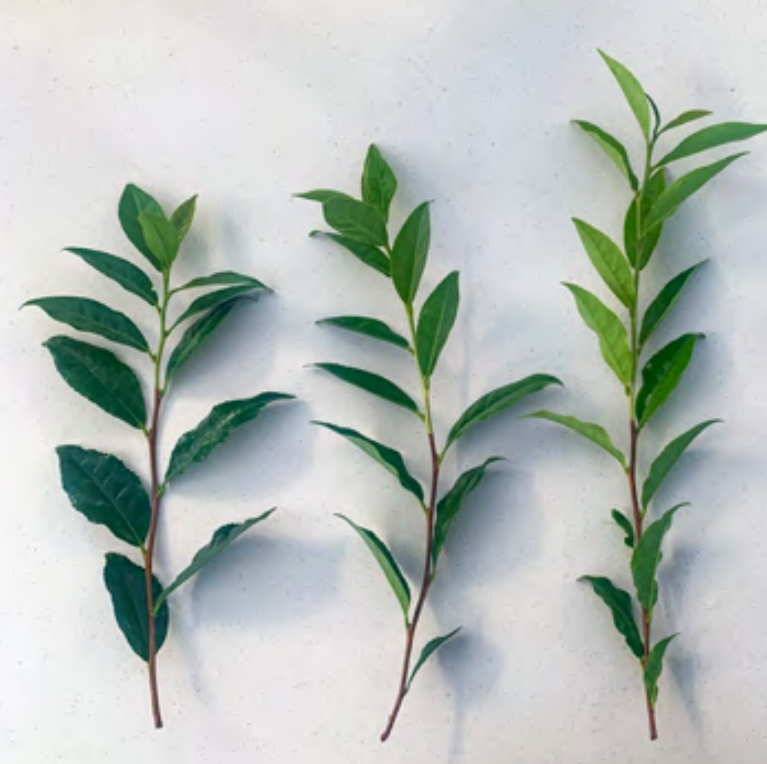
- The tea shoot should be about five to seven months old with slightly reddened bark and have healthy leaves with active axillary buds (Fig. 2). Such growth on mother plants is mostly observed in September and October in western Washington.
- Cut the shoot at the node above where the bark becomes slightly woody. The shoot will be about 10 to 12 inches long.
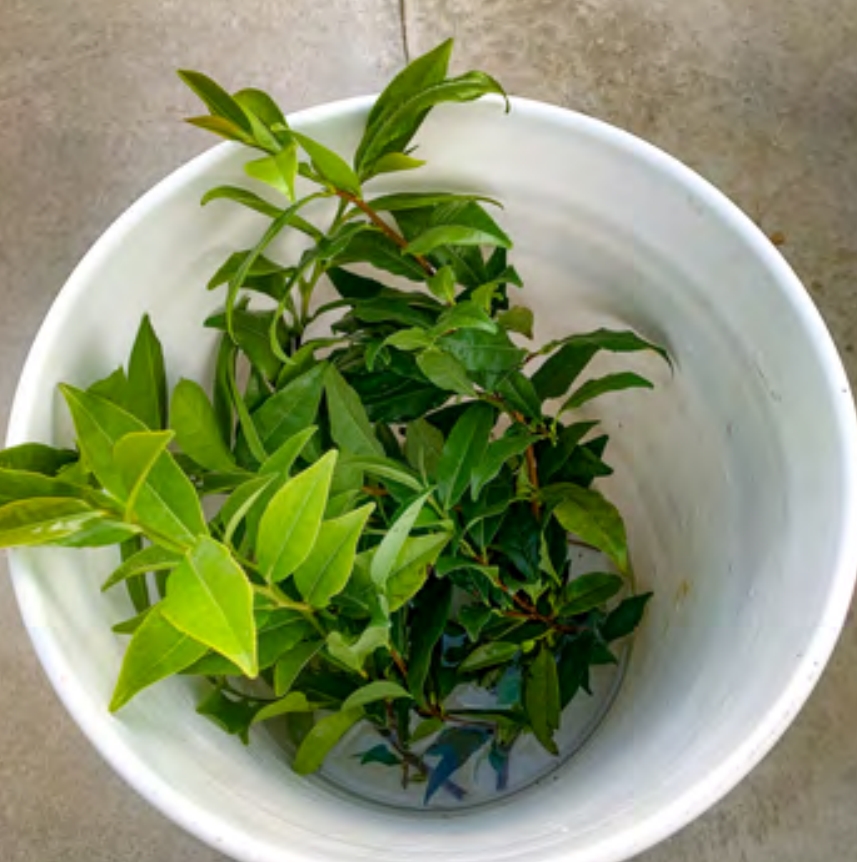
- Place the harvested shoots in a bucket of water such that the base of the shoots are submerged in water (Fig. 3).
- The following steps should be carried out as soon as possible in the shade or a cool area.
- Single-node, two-node or three-node cuttings can be made from the harvested shoots. Single-node tea cuttings maximize the number of cuttings from mother plants and develop into plants that are equal in size as two- and three-node cuttings the following summer.
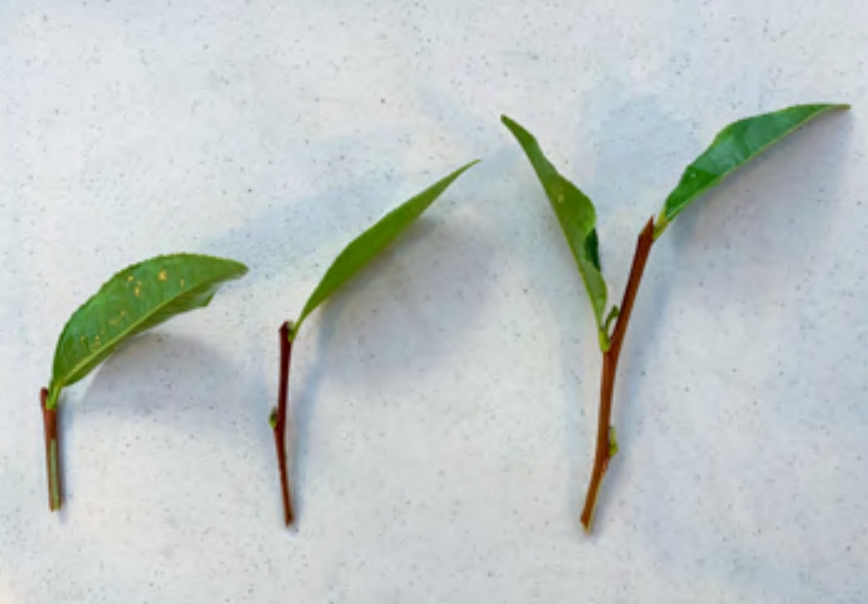
- Cut the shoot about 0.2 – 0.4 inches above a node for one-node cuttings, and about 1.2 – 1.6 inches below the second node or third node for two-node or three-node cuttings, respectively (Fig. 4).
- For one-node cuttings, do not remove the leaf. For two- and three-node cuttings, carefully remove the bottom leaf. Be very careful not to damage the axillary bud when removing the leaf.
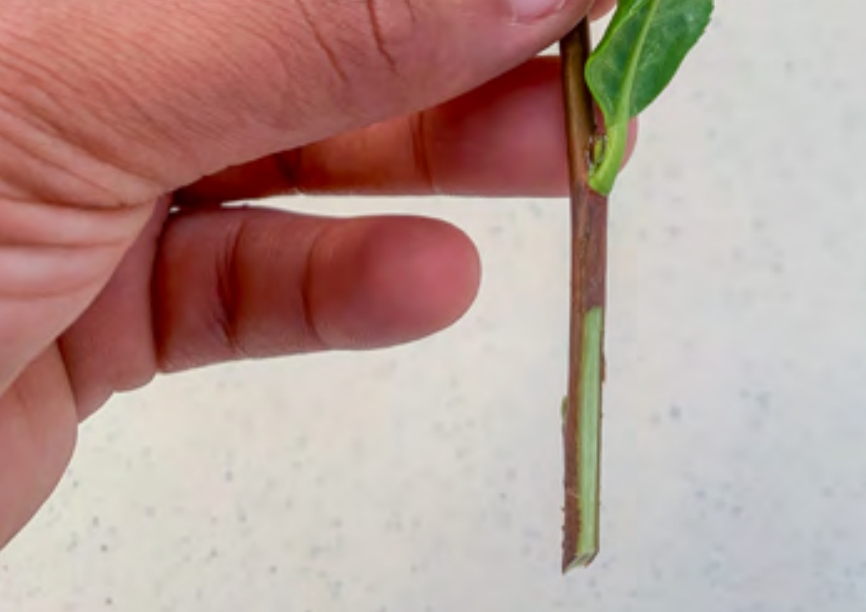
- Score the cuttings using a knife, to remove 1 – 2 inches of bark on one or both sides of the cutting’s base (Fig. 5). Stem scoring encourages adventitious root formation by activating cell division between the bark and wood. Scoring also facilitates better absorption of water and rooting hormones by cuttings.
- After scoring, dip the bottom end of the cutting into a rooting hormone (Dip’n Grow, Clackamas, OR) for 5 – 10 seconds.
- Stick the cutting into a treepot filled with propagation medium such that the bottom leaf and node are just above the soil line.
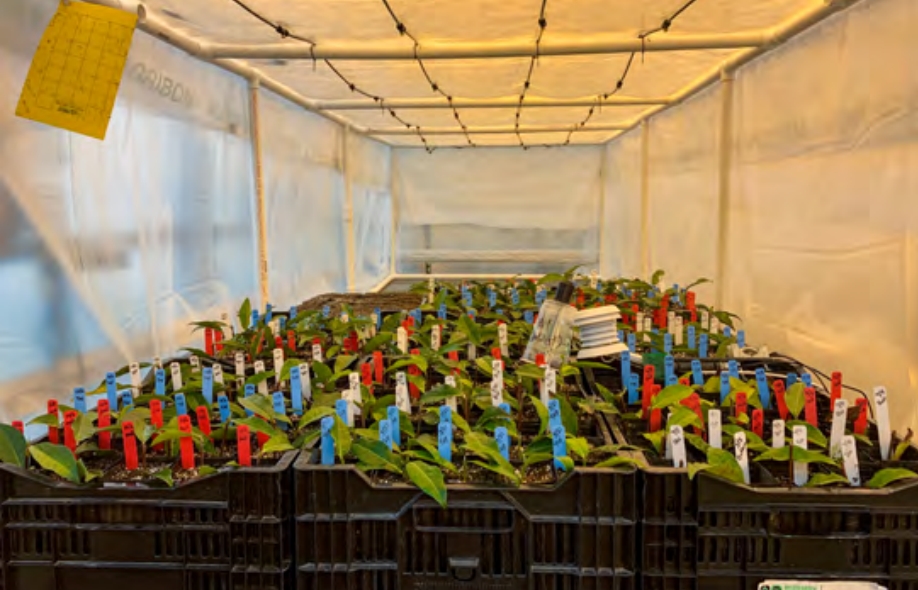
- Place the treepots with cuttings in a mist chamber (Fig. 6) and mist the cuttings for 20 seconds every 30 minutes.
- Maintain 50 – 80% shade in the chamber for 4 – 6 months, checking the cuttings frequently for uneven misting and any other problems. Set greenhouse lights to a 12-hour light/dark cycle, with light at 48-58 PAR (µmol/m²/s), unless outdoor light reaches this sufficiency level.
- When the cuttings start developing roots, in about 4 – 5 months, slowly transition the plants to conditions outside of the mist chamber:
- Reduce the misting rate to 20 seconds every 1.5 hours.
- Fold the plastic up from the sides of the chamber but keep the plastic and shade cloth on top of the chamber for another 1 – 2 months.
- Take the cuttings out of the mist chamber, place them on the greenhouse bench, and apply water as needed so that potting medium does not become dry. Apply slow-release fertilizer (e.g., Osmocote Plus, The Scotts Company, Marysville, OH). For treepots (model listed below) apply about 1 teaspoon per pot. Apply fertilizer every 6 months or as needed if plants appear stressed (nitrogen stress will cause leaves to be pale green)
Building a Mist Chamber
A mist chamber can be constructed using PVC pipe. Specific size can vary but an example is 14 ft long × 5 ft wide × 3 ft tall. Follow the link below for the detailed instructions, supplies, and estimated costs of building a mist chamber.
Transplanting Rooted Tea Cuttings
Tea plants will be ready for transplanting about 1 year after cuttings are collected. Plants grown under controlled environmental conditions need time to adjust and acclimatize to the conditions of their final location. Harden-off the cuttings for about 1 month before transplanting:
- Place the plants outside for 1 – 2 hours each day
- Gradually increase this duration until the plants can withstand the outdoor conditions without showing any signs of stress.
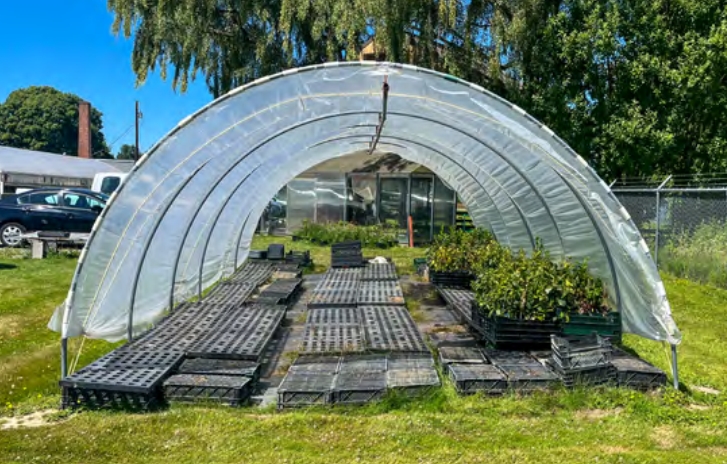
- Alternatively, place plants in a hoop house (Fig. 7) and open or close ends and sidewalls based on weather conditions.




This material is based upon work that is supported by Washington State Department of Agriculture Nursery Grant. Any opinions, findings, conclusions, or recommendations expressed in this publication are those of the author(s) and do not necessarily reflect the view of the Washington State Department of Agriculture.
Product information is provided as examples in this publication and is not intended to endorse these products. Similar products that function the same can be used.