Growing Sweetpotatoes in Western Washington
Growing Sweetpotatoes in Western Washington: Greens
Authors: Laura Schulz1, Laurel Moulton2, Samantha Grieger2, Jordan White1, Jessica Weaver1, Srijana Shrestha3, Carol Miles1
Affiliation: Washington State University, 1Northwestern Washington Research and Extension Center, Mount Vernon; 2Extension; 3Oregon State University Extension
https://vegetables.wsu.edu/sweetpotato/
January 2026
Introduction
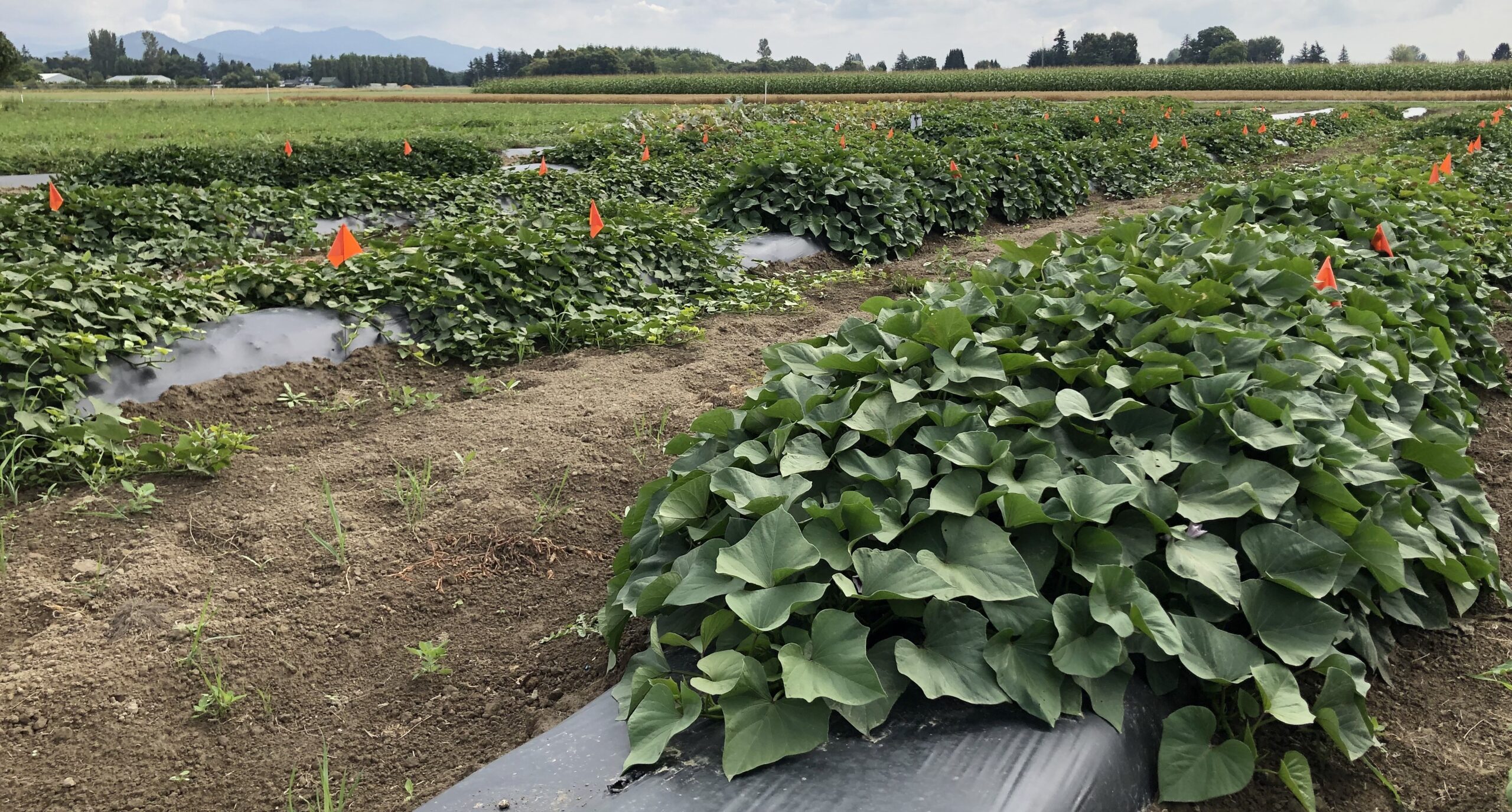
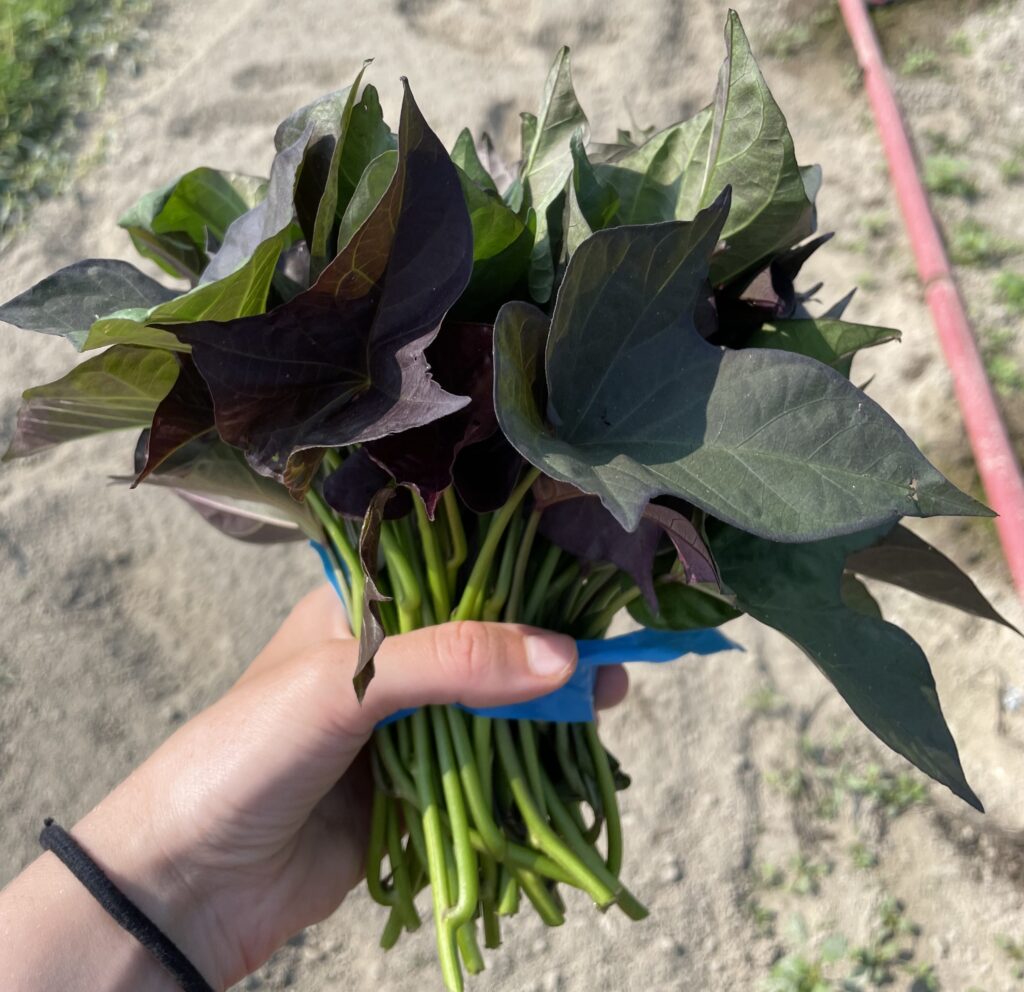
Sweetpotato (Ipomoea batatas) is in the Convolvulaceae (Morning Glory) family and stems and leaves are edible, unlike leaves of potato (Solanum tuberosum), which are in the Solanaceae (Nightshade) family. Tender sweetpotato vine tips are consumed as a vegetable in many regions of the world, including the Pacific Islands, Asia and parts of Africa. Sweetpotato greens are a highly nutritious leafy green that can be harvested throughout the hot summer months when many other leafy greens decline in quality (Figure 1). Sweetpotato greens can be marketed as a replacement for spinach throughout the late summer and early fall. Some growers in western Washington grow sweetpotato only for the greens and do not harvest the roots at all. The greens are typically sold in bunches of about 15-20 stems for $3 to $5 per bunch.
Nutritional Value
Sweetpotato greens are high in many nutrients, including carotene, calcium, and iron (Ishiguro et al. 2004). They have moderately high levels of polyphenols, which act as an antioxidant (Ishiguro et al. 2004; Islam 2014).
How and When to Harvest Sweetpotato Greens
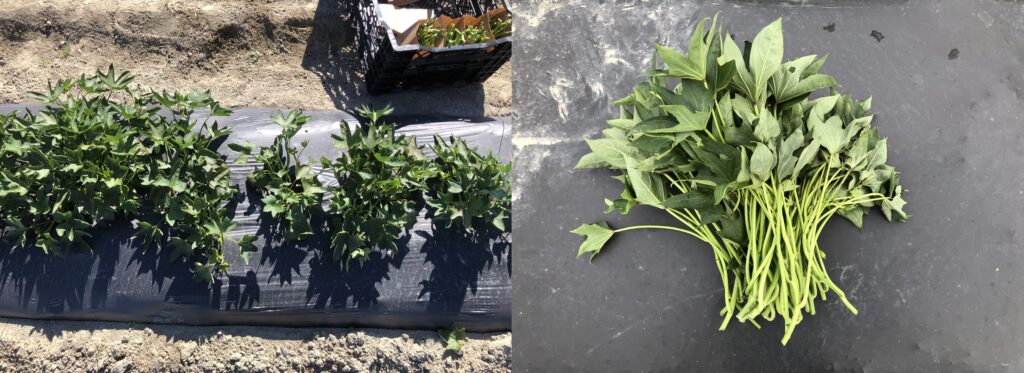
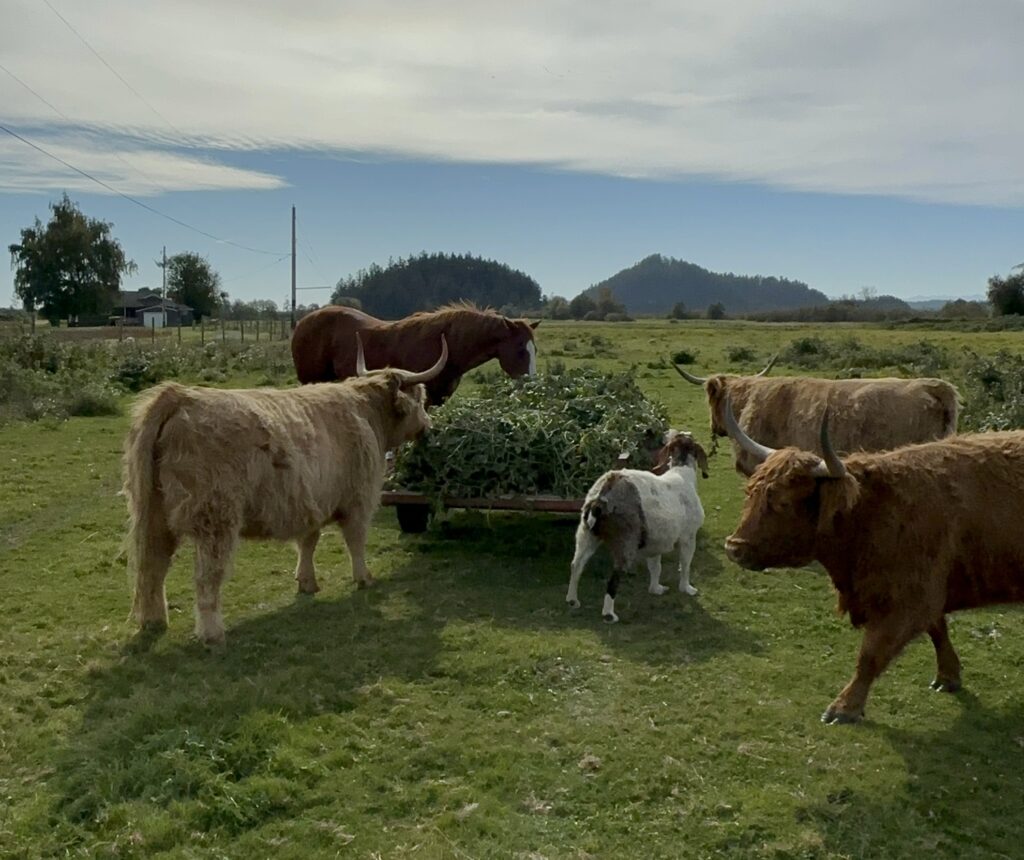
Cut 4 to 6 inches of the vine tip from sweetpotato vines that are at least 12 inches long. In western Washington, vine tips can be harvested starting about 8 weeks after transplanting. Production peaks around 10 to 12 weeks after transplanting and remains steady until root harvest. Sweetpotato vines can be recut as soon as new tips regrow, about every 2 weeks. Older leaves and stems are typically tough and not preferred for human consumption but can be fed to livestock.
Impact of Harvesting Greens on Root Yield
Harvesting sweetpotato greens has a major impact on root yield. In a trial in Mount Vernon, WA in 2023 and 2024, sweetpotato plants that had all vine tips removed at 2 week intervals throughout the growing season had 37–54% lower root yield than plants where no greens were harvested. To reduce the impact on root yield, greens should be harvested minimally or starting 12 or more weeks after transplanting.
Harvesting vine tips just before root harvest will have no impact on root yield. When the roots are ready for harvest, cut the vine tips for greens and then cut and remove the entire top of the plant. Removing vines from the field makes accessing roots during harvest easier. Vines can be used as livestock feed (Puerto 2024).
Selling Sweetpotato Greens
Although harvesting greens has a major impact on root yield, the economic return can be very good if there is a market for sweetpotato greens. For example, harvesting greens at a 2-week interval from 8 to 16 weeks after transplanting had a 42% higher economic return compared to harvesting and selling only the roots when market prices were $3/lb for roots and $3/bunch (20 stems) for greens (Table 1), and economic return was 2 times greater when market prices were $3/lb for roots and $5/bunch for greens. In an informal survey conducted in 2025 at WSU NWREC, growers said they would sell bunches of 20 vine tips for $2–5, while consumers reported they would be willing to pay $3–4 per bunch.
Table 1. Economic returns ($/acre) for four sweetpotato greens harvest schedules (none, early, late, and continuous greens harvest). Estimates based on greens and root yield data from 2023 and 2024 in Mount Vernon, WA. Assumptions: roots are sold for $3/lb and greens are sold for $3/bunch (20 stems).
| Treatment | 8 WAT | 10 WAT | 12 WAT | 14 WAT | 16 WAT | Roots | Total |
|---|---|---|---|---|---|---|---|
| None | $27,900 | $27,900 | |||||
| Early | $3,700 | $10,200 | $4,300 | $12,000 | $30,200 | ||
| Late | $11,200 | $4,700 | $4,600 | $15,000 | $35,600 | ||
| Continuous | $3,400 | $10,000 | $4,300 | $5,700 | $5,200 | $11,300 | $39,800 |
Cooking and Consuming Sweetpotato Greens
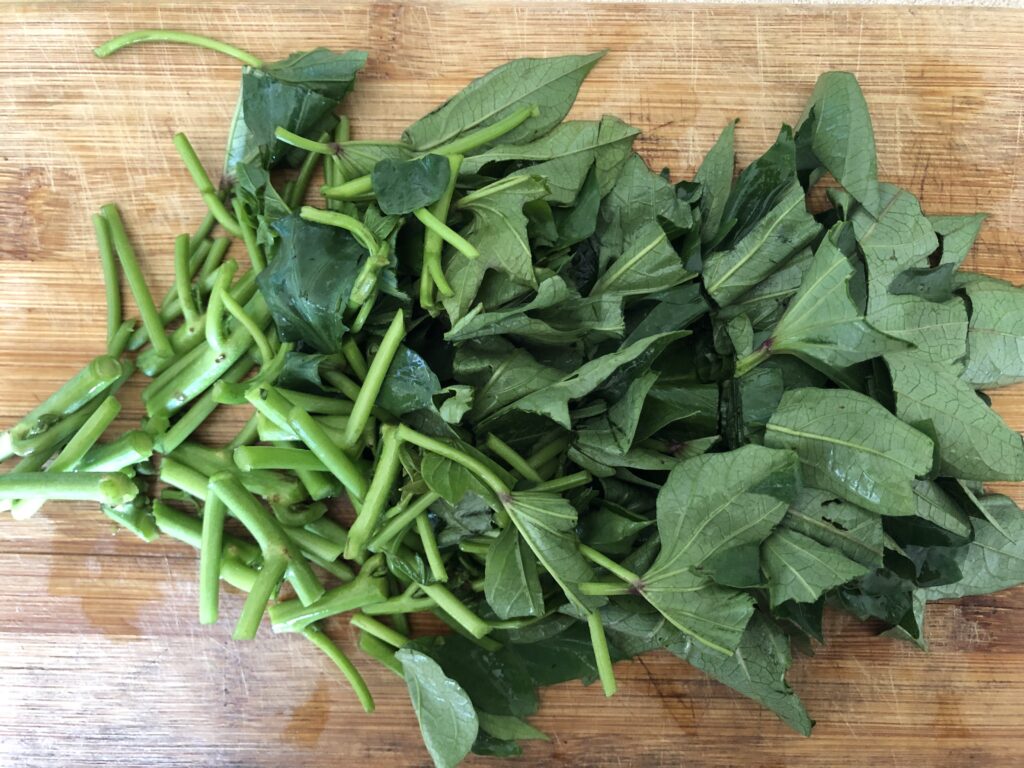
Sweetpotato greens have a similar taste to spinach while being less bitter, and stay more firm when cooked, similar to kale. Sweetpotato greens can be consumed like other leafy greens: fresh/raw, stir-fried, or steamed. Greens can be frozen or dried for later use. Sweetpotato greens can also be boiled for 2–3 minutes to make a sweetpotato “green tea” (Ishiguro et al. 2004).
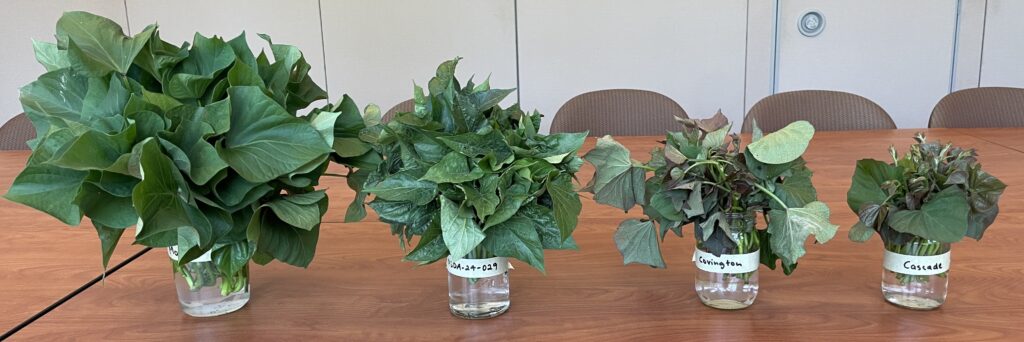
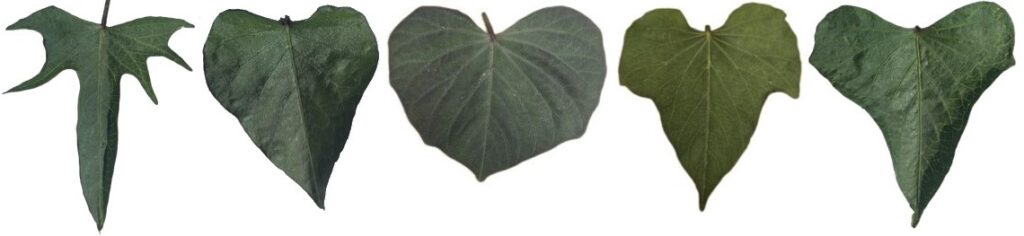
In a 2025 taste test, farmers and consumers in western WA tried sweetpotato greens from 6 varieties (Figure 2). Each variety had different characteristics, including leaf shape, size, and color (Figure 3). Participants rated leaf color, leaf size, and foliar pest damage as the most important factors for sweetpotato greens quality. Factors such as number of leaves per stem, leaf shape, and vine length were rated as less important. Participants preferred the appearance of sweetpotato greens from bushier and more upright varieties.
References
Ishiguro K, Toyama J, Islam S, Yoshimoto M, Kumagai T, Kai Y, Nakazawa Y, Yamakawa O. 2004. Suioh, a new sweetpotato cultivar for utilization in vegetable greens. Acta Horticulturae. 637:339–345. https://doi.org/10.17660/ActaHortic.2004.637.42.
Islam S. 2014. Medicinal and nutritional qualities of sweetpotato tops and leaves. University of Arkansas at Pine Bluff Cooperative Extension Program. FSA6135. https://www.uaex.uada.edu/publications/PDF/FSA-6135.pdf.
Puerto G. 2024. Observational study of livestock acceptance of feeding sweetpotato vines. Washington State University Vegetable Horticulture. https://wpcdn.web.wsu.edu/extension/uploads/sites/25/2024/10/Observational-study-of-livestock-acceptance-of-feeding-sweetpotato-vines-After-Radhikas-observations.pdf.

The information in this publication is based upon work that is supported by the U.S. Department of Agriculture, National Institute of Food and Agriculture, under award number 2022-38640-37490 through the Western Sustainable Agriculture Research and Education Program under project number WPDP25-003, and Hatch Project WNP0010 Accession 7005372. Any opinions, findings, conclusions, or recommendations expressed in this publication are those of the author(s) and are not meant to endorse any businesses or detract from any not listed.