Growing Sweetpotatoes in Western Washington
Sweetpotato Production Practices
Authors: Laura Schulz1, Laurel Moulton2, Samantha Grieger2, Jordan White1, Jessica Weaver1, Srijana Shrestha3, Carol Miles1
Affiliation: Washington State University, 1Northwestern Washington Research and Extension Center, Mount Vernon; 2Extension; 3Oregon State University Extension
https://vegetables.wsu.edu/sweetpotato/
January 2026
Introduction
Sweetpotato (Ipomoea batatas) is a heat- and sun-loving crop that requires 90–120 frost-free days to grow. Sweetpotato is in the Convolvulaceae (Morning Glory) family, unlike potatoes (Solanum tuberosum), which are in the Solanaceae (Nightshade) family, and true yams (Dioscorea spp.), which are in the Dioscoreaceae (Yam) family. This makes sweetpotato a great choice for crop rotations, as there are no other crops in the family that are cultivated in the United States. Sweetpotatoes are tuberous roots (modified roots, commonly called storage roots), while potatoes and yams are both tubers (modified stems). Researchers and industry groups write “sweetpotato” as one word to avoid confusion with potatoes that are sweet and to emphasize that potatoes and sweetpotatoes are completely unrelated species.
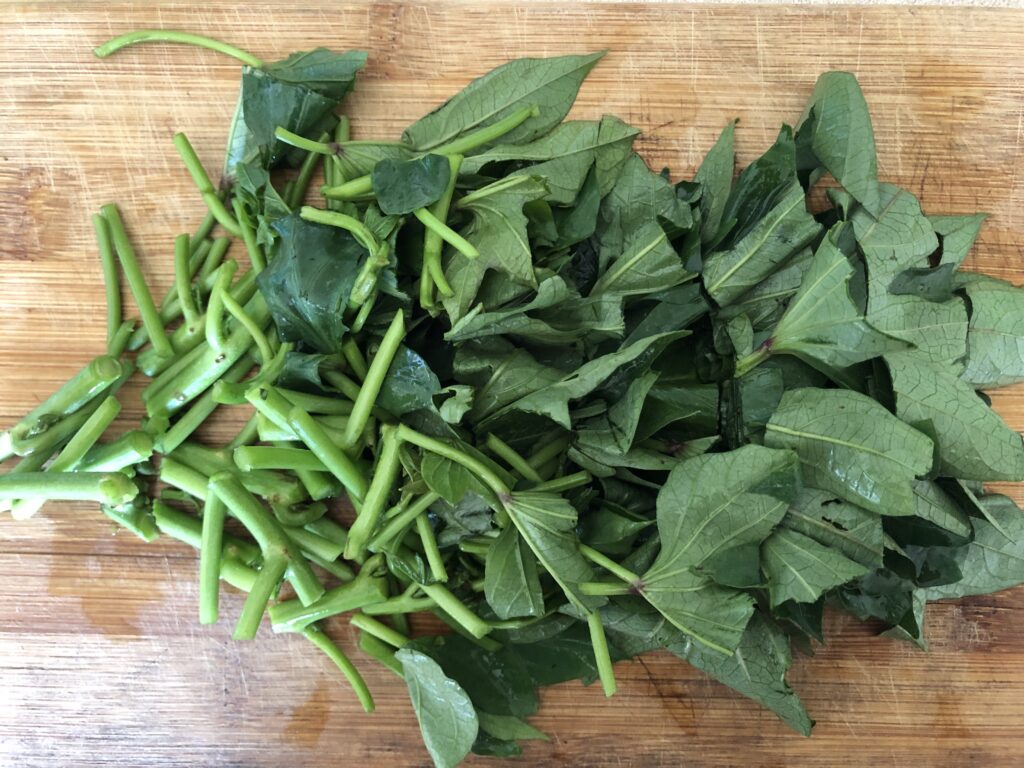
Though sweetpotatoes are typically grown as a root crop, the entire plant is edible, including the vines. The vine tips (greens) or leaves alone can be harvested for human consumption, and the entire vine can be used as animal feed (unlike potato leaves). Sweetpotato leaves and vines are very similar to spinach in eating quality, they can be eaten raw or cooked, and they hold up in cooking similar to kale.
Sweetpotato is one of the most nutritious root crops and ranks fifteenth in world food production (FAO 2022). Sweetpotato’s high nutritional value and the projected increase in areas suitable for its production with climate change make it an important crop for climate resilience and addressing nutritional deficiencies (Manners and van Etten 2018).
Globally, 57% of the world’s sweetpotatoes are produced in China (FAO 2013–2023 average). The United States ranks 9th in global sweetpotato production, producing only about 1.4% of the world’s sweetpotatoes (FAO 2013–2023 average). The top sweetpotato producing states are North Carolina, Mississippi, and California (USDA NASS 2022). California is the top state for organic sweetpotato production (USDA NASS 2022).
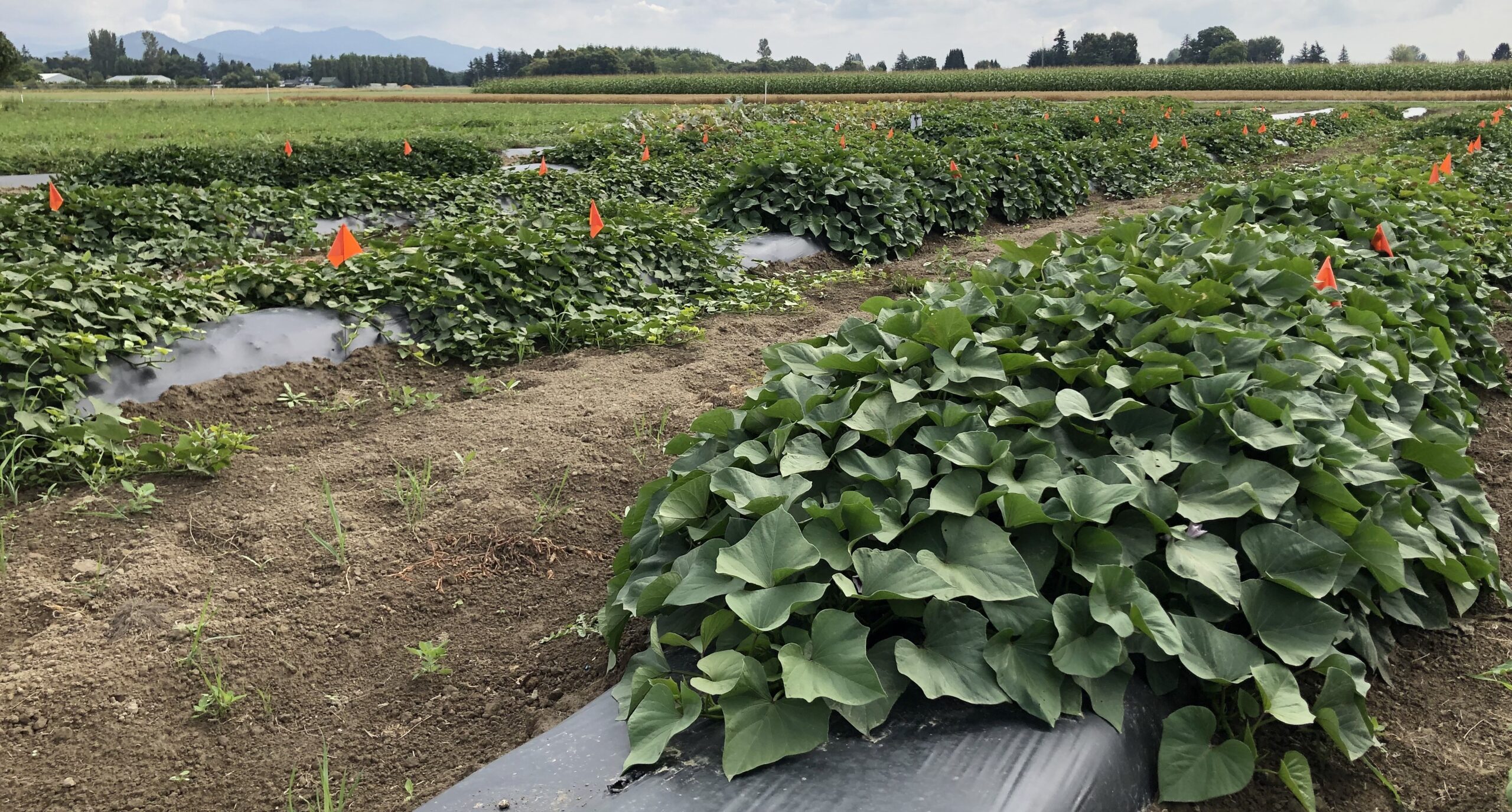
Sweetpotato production in the northern United States is limited due to the perceived barriers of a short growing season and relatively cool summer temperatures. Yet, recent studies have shown that in northern regions when sweetpotatoes are grown with plastic mulch, yield can be equal to or greater than the national average of 11 tons/acre (Duque 2020; Sideman 2015; Shrestha and Miles 2022; Wees et al. 2016). Research in Western Washington has shown yields comparable to the national average for some varieties in warmer years. Local farmers are interested in growing sweetpotatoes to diversify locally grown market offerings, add another plant family to crop rotations, and to better serve customers and family members who have food sensitivities. Some growers are also interested in sweetpotato as an alternative leafy green crop to spinach in late summer and early fall.
There are several environmental factors that promote high sweetpotato yields in northern latitude regions. Sweetpotato foliage growth is promoted by long day lengths, while root development is promoted by short days (Lebot 2020). Thus, in high latitude regions, long day lengths during the summer promote rapid growth of foliage that can result in higher root yields as day lengths rapidly decrease in the early fall. Additionally, cool (68 °F) nighttime air temperatures promote higher yields and earlier maturity in sweetpotato (Lebot 2020).
In a trial of 9 varieties of sweetpotatoes in Mount Vernon, WA, in 2023, 2024, and 2025, the 3-year average marketable yield ranged from 3 to 12 tons/acre. The keys to successful production in this region are growing suitable varieties, planting into warm soil, maintaining warm soil throughout the growing season, and providing adequate weed control and irrigation during plant establishment.
Slips
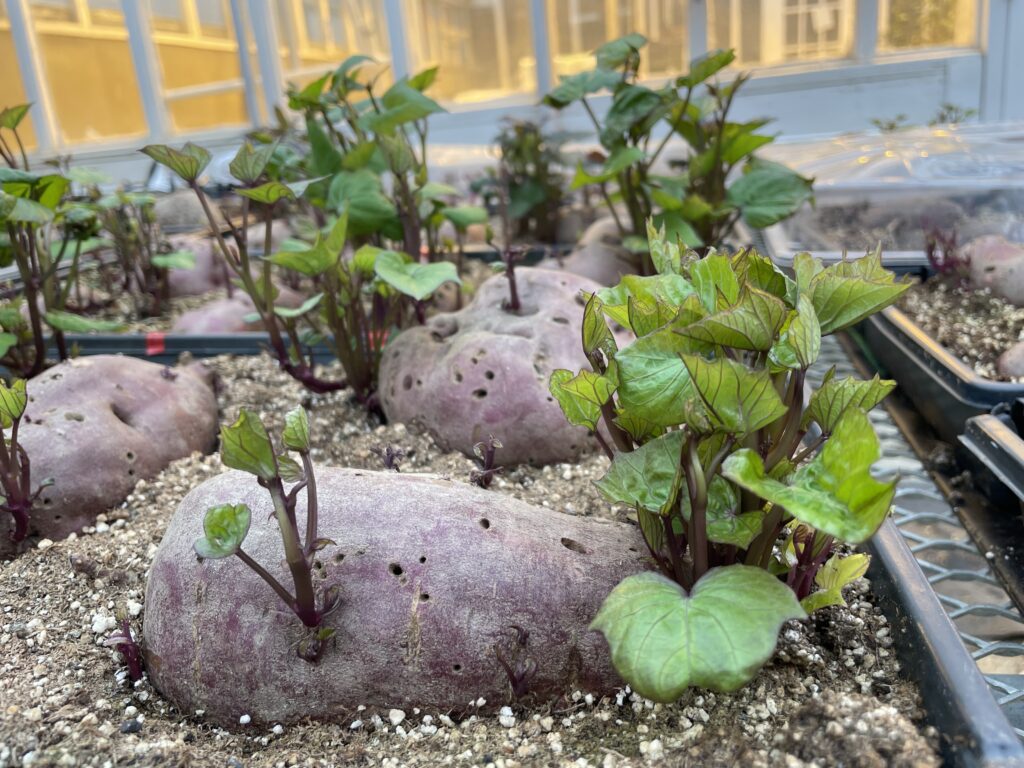
Sweetpotatoes are planted using slips, which are vine cuttings about 6–12 inches long with 5–8 nodes, taken from sprouted sweetpotato roots. Sweetpotato slips can be purchased from seed catalogs or produced on-farm. Planting non-rooted sweetpotato slips directly into the field is the generally preferred planting method.
Prerooting Slips
Pre-rooted slips are sometimes used in areas with short growing seasons to try to increase sweetpotato yield (Wees et al. 2016). With the complex microclimates present throughout western Washington, planting pre-rooted slips may improve yields in cool areas, or where there tend to be early summer frosts (mid to late June) or early autumn frosts (end of September).
Read our growing guide on sweetpotato slips to learn more.
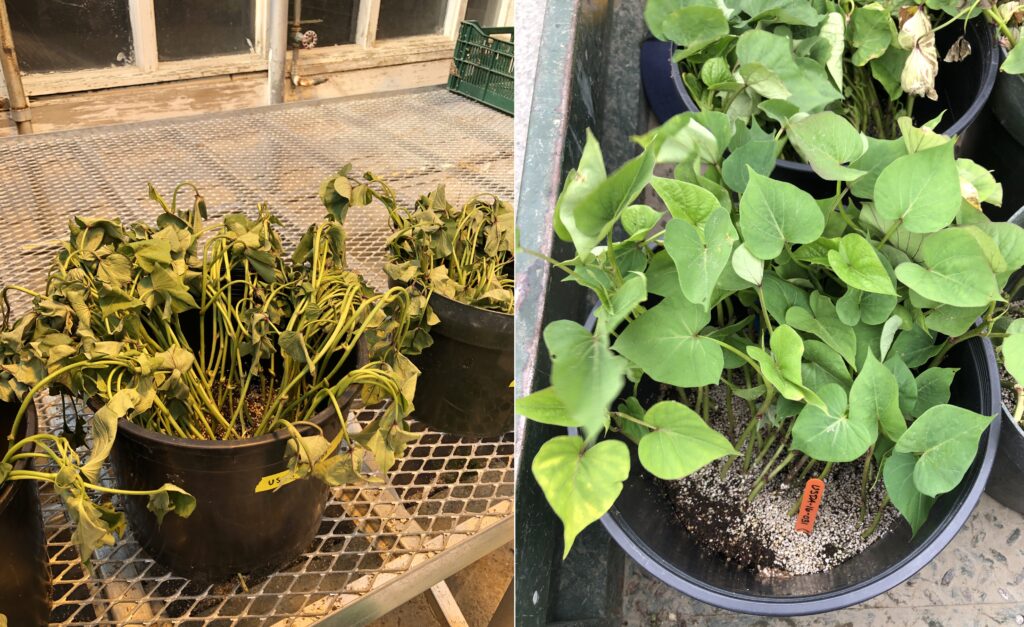
On-farm WSU trials in 2024 and 2025 found that pre-rooted slips experienced minimal transplant shock, lost little to no leaves in the first two weeks after planting, and experienced less wilting than slips planted without pre-rooting. Several western Washington growers have reported that pre-rooted slips had less transplant shock and developed new growth within days unlike non-rooted slips. Similarly, a study in Croatia found that slips that were pre-rooted in potting mix for 30 days before transplanting had significantly higher yield (both weight and number of roots) than unrooted slips (Novak et al. 2007).
If using pre-rooted slips, it is important that the slips do not become rootbound. The first roots that form on sweetpotato slips become the storage roots that are harvested, so rootbound slips will produce misshapen sweetpotatoes. Do not pre-root slips in water as this produces a weak root system. Place slips together in loose potting mix (for example, 50 slips could be placed together in a 1-gallon pot) (Figure 1), or slips can be placed individually into smaller pots. Do not allow the slips to become rootbound (Figure 2). Plant pre-rooted slips as soon as the risk of frost has passed.
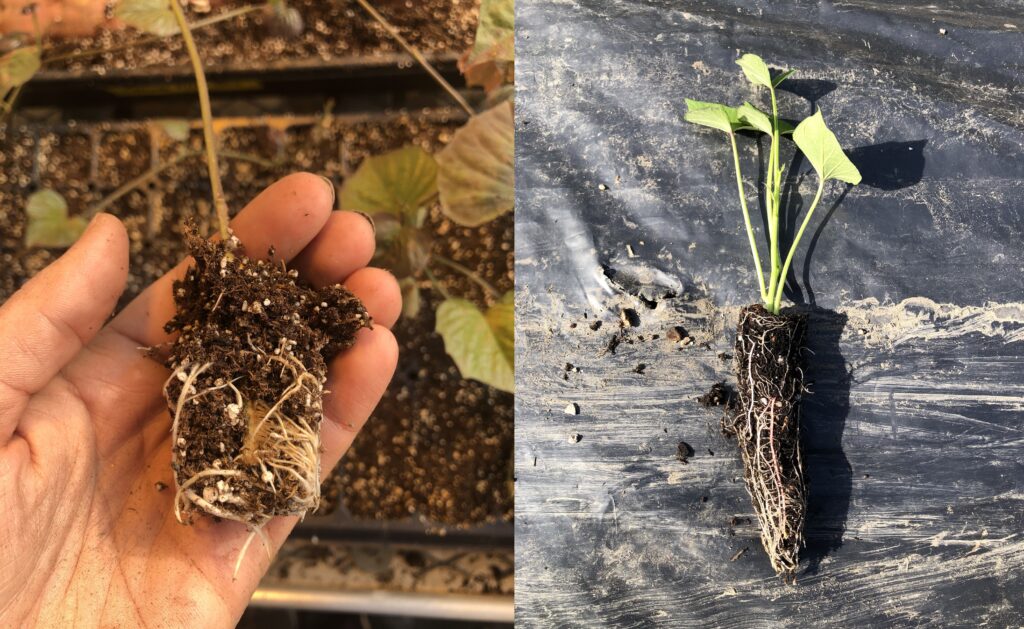
When ordering slips with the intention to produce pre-rooted slips, be sure to order early enough to allow enough time to pre-root them. Typically slips are pre-rooted for 7 to 14 days, and a maximum of 21 days.
A consideration regarding the use of pre-rooted slips is the labor needed for transplanting, which is greater than for non-rooted slips (Bornt 2012). Additionally, pre-rooting slips requires greenhouse space and potting supplies.
Handling Slips Received in the Mail
Slips that are received in the mail can be planted immediately into the field. If slips cannot be planted right away, they can be wrapped in or covered with wet paper towels or placed in water and held in a cool shaded area for 1–2 days, or can be placed in a large pot with loose potting mix for 1–2 weeks before planting (Figure 2). If placing in a large pot with potting media, only bury the bottom 1-inch of the slips. To avoid misshapen sweetpotatoes, re-cut the ends of the slips before planting to encourage new roots to form. Sweetpotatoes are extremely susceptible to chilling injury, so never refrigerate slips (Hammett 1985).
Sweetpotatoes produce harvestable roots from nodes that are within a few inches of the soil surface. Thus, some farmers plant slips horizontally to allow more nodes from the slip to produce storage roots, potentially increasing yield. Slips can be planted horizontally by digging a trench, laying all slips down, then covering the slip with soil, with the top one to two nodes and growing point above the soil surface. A small study at WSU NWREC found a slight increase in root yield (17%) when slips were planted horizontally instead of vertically. However, when planting into raised beds covered with plastic mulch, planting slips vertically is faster and easier.
Soil Type
Sweetpotatoes grow best in fertile and well drained loam, sandy-loam or clayey-loam soil. Clay soil is common in parts of western Washington, and heavy clay soil can restrict sweetpotato root development and cause roots to be irregularly shaped, leading to difficult harvest and lower marketable yield (Mukhopadhyay et al. 2011). In areas with heavy clay soil, plant sweetpotatoes in raised beds or amend fields with compost. Heavy clay soils can also lead to cooler soil temperature and are at risk of holding more water later in the season once the rains begin. Sweetpotato roots left in the field when soil becomes saturated may rot, or develop large lenticels or deformities such as corky root. Time harvest so it is complete before heavy rains start.
Sweetpotatoes do best within a pH range between 5.6 and 6.6. They can tolerate slightly acidic soil but growth is inhibited when pH is lower than 5.5.
When to Plant
Slip transplanting survival is greatest when soil temperature is at least 65 °F at a 4-inch depth for 4 days in a row, typically about 3 to 4 weeks after the frost-free date. In western Washington, this ranges from mid-May to early July depending on the microclimate. In research trials in Mount Vernon, WA, slips are typically planted mid-May through the first week of June. Sweetpotato slips are extremely sensitive to cold soil temperatures, so planting before soil is sufficiently warm is not recommended. Soil warming techniques such as plastic mulch, low tunnels, and high tunnels can be used to increase soil temperature prior to planting. Row cover can be added over the crop after transplanting, to increase temperature.
In-Row Plant Spacing
Spacing of 10 inches between plants in a row is recommended for western Washington. A plant spacing trial in Mount Vernon, WA in 2023 and 2024 compared 8, 10, and 12 inch in-row spacing and found that maximum sweetpotato yields were achieved with 8 or 10 inch spacing, but considering the cost of slips, 10 inch spacing was the most profitable.
In-row plant spacing affects both root size and yield of sweetpotatoes. In general, planting sweetpotato slips closer together will slightly decrease the root yield per plant but will increase overall yield per acre because there are more plants per acre (Duque et al. 2022; Schultheis et al. 1999; Shrestha and Miles 2022; Wees et al. 2016). Root size tends to increase as plant spacing increases due to less competition between plants. Jumbo sweetpotato roots are usually undesirable and large and medium-sized roots are preferred for fresh markets (Schultheis et al. 1999). Fingerling size is a new market category for sweetpotatoes and may be well suited for direct marketing (Hoffman 2019).
Narrower in-row spacing also results in more canopy cover early in the growing season (Shrestha and Miles 2022), which may reduce weed competition, especially when grown without mulch.
Row Spacing
Spacing between rows is determined by equipment requirements. In trials in Mount Vernon, WA, 6-foot spacing between rows was used to allow for mechanical weed control and harvest with a single-row potato digger. In commercial sweetpotato production in the southeastern United States, 3 to 4 feet between-row spacing is typically used as this fits their equipment. Growers should determine between-row spacing based on existing equipment requirements, with a minimum of 2.5 feet between rows (Szarvas et al. 2019).
Plastic Mulch
The optimal soil temperature range for sweetpotato root development is 77–86 °F (Lebot 2020). In many areas of western Washington, plastic mulch is needed to reach these optimal temperatures, which increases sweetpotato yield (Novak et al. 2007; Shrestha and Miles 2022; Sideman 2015). In warmer microclimates, where average air temperatures during the growing season reach this optimum temperature, plastic may not be needed (Gajanayake et al. 2015). However, plastic mulch also reduces labor inputs for weed management and improves irrigation efficiency by reducing water loss from the soil. Straw mulch, which does not warm the soil, may be useful in warm regions like eastern Washington for suppressing weeds, though it is not recommended in western Washington since it cools the soil and provides habitat for slugs and rodents.
Black polyethylene (PE) is an effective mulch for sweetpotato production in western Washington (Shrestha and Miles 2022). PE mulch increased soil temperature by 3.5 °F, and sweetpotato root yield was 2.5 to 4.2 times higher when grown with PE mulch compared to bare soil in a two-year study in Mount Vernon, WA. When available, soil-biodegradable plastic mulch is a good option as it can be tilled into the soil at the end of the growing season, though some types of soil-biodegradable mulch do not warm soil as much as PE mulch (DeVetter et al. 2017; Ghimire et al. 2018, Tofanelli and Wortman 2020). A study in Mount Vernon, WA found that sweetpotato yield was higher when grown with PE mulch (8.9 tons/acre) than with soil-biodegradable mulch (6 tons/acre) likely due to soil warming (Shrestha and Miles 2022).
The two most important mulch factors to consider are color and the contact between the mulch and the soil surface. Black plastic mulch provides both soil warming and weed control (Lamont 1999). Clear plastic mulch can provide greater soil-warming than black plastic, but it does not control weeds (Devi et al. 2020). White or reflective silver mulches lower the soil temperature (Lamont 1999), so they are not recommended in western Washington. Close contact between the plastic mulch and soil provides the best warming effect as heat is transferred directly from the plastic to the soil. Beds should be smooth, and the plastic anchored firmly in place to create this close contact (Lamont 1999). This also prevents slips from being burned by hot air that gets trapped in gaps between the mulch and soil, known as the chimney or heat tunnel effect.
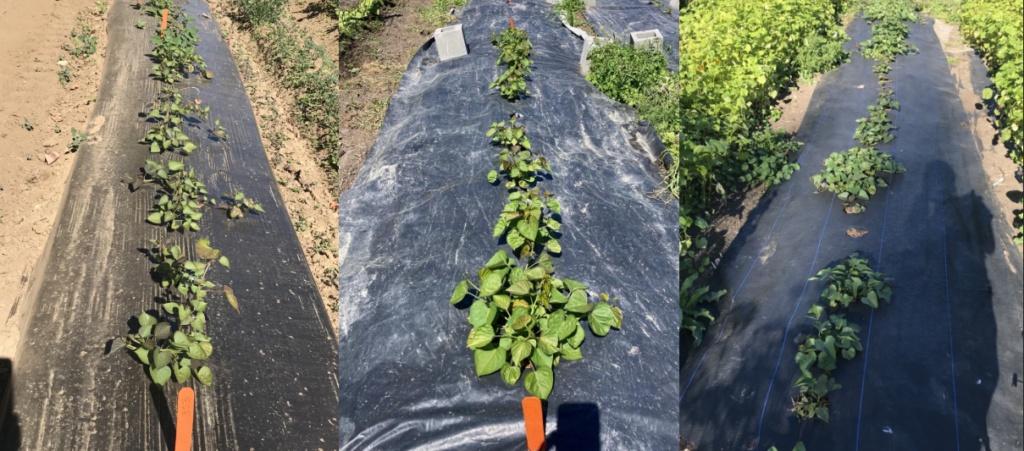
Farmers in western Washington have used reusable or recycled black plastic including silage tarps, metal/lumber packing plastic, 6 mil polyethylene plastic, and woven weed barrier fabric with success (Figure 3). Not all black plastic provides the same warming qualities so farmers will need to test products at their site. Some farmers have also increased the temperature by using floating row covers, low tunnels, or high tunnels.
Raised Beds
Sweetpotatoes are typically planted in raised beds to improve soil aeration, increase soil warming, and make harvest easier. Raised beds that are 6 to 8 inches in height and about 30 inches wide are effective for sweetpotato production in western Washington.
Fertilizer
Sweetpotatoes have relatively low nutrient requirements. Over-fertilization, especially with nitrogen, can promote vigorous vine growth at the expense of root production, leading to lower yields (Lebot 2020). Sufficient levels of potassium are important for storage root yield (Lebot 2020). Add fertilizer based on soil test results to avoid over-fertilizing. Nutrient requirements for sweetpotatoes are shown in Table 1.
For more information on calculating fertilizer rates or using manure, compost, and cover crops for soil fertility management, see Soil Fertility in Organic Systems: A Guide for Gardeners and Small Acreage Farmers.
Table 1. Nutrient requirements for sweetpotatoes in western Washington.
| Nutrient | lbs/plant | lbs/100-ft row | lbs/acre |
|---|---|---|---|
| N | 0.0113 | 1.47 | 98 |
| P | 0.0022 | 0.26 | 19 |
| K | 0.0215 | 2.59 | 187 |
Irrigation
Sweetpotatoes need irrigation for slip establishment and to successfully produce a marketable crop. In general, 18 to 26 inches of water distributed throughout the growing season are needed to produce a good sweetpotato crop (Stathers et al. 2013). While irrigation management is dependent on soil type and temperature, general recommended irrigation frequency is shown in Table 2. Apply 0.5 inches of water for each irrigation event and adjust irrigation amount as needed to wet the root zone (Felix et al. 2012; Smith and Villordon 2016). For example, in Mount Vernon, WA, sweetpotatoes were grown with plastic mulch and drip irrigation was applied for approximately 3 hours once a week (0.5 inches), skipping irrigation in weeks with significant rain. If using soil water tension (SWT) to determine when to apply irrigation, irrigate when SWT reaches 25 kPa (Felix et al. 2012).
Table 2. Recommended irrigation frequency and depth for sweetpotatoes from planting until harvest around 120 days after transplanting (DAT). Adapted from Felix et al. (2012), Smith and Villordon (2016), and Stathers et al. (2013).
| At Planting | 0–20 DAT | 20–40 DAT | 40–100 DAT | 100–120 DAT | |
|---|---|---|---|---|---|
| Typical dates in western WA | June 1 | June 1–June 20 | June 20–July 10 | July 10–Sept 10 | Sept 10–Oct 1 |
| Irrigation Frequency | Irrigate within 1 hour of planting | Twice a week | Once a week | Once every two weeks | Stop irrigating 1–2 weeks before harvest |
| Root Zone Depth | 6 inches | 8 inches | 15 inches | 15 inches |
Sweetpotato is considered a drought tolerant crop, and though the vines can survive long periods of drought, roots do not develop in drought conditions (Woolfe 1992). When plants experience drought stress during root initiation, plant symptoms resemble herbicide damage, and roots will become pencil roots or misshapen (Smith and Villordon 2016). Uneven watering can cause root cracking, and overwatering or extended periods of heavy rain can reduce storage root development and cause water blisters and root rot (Stathers et al. 2013). Water blisters, or edema, are small lumps that are enlarged lenticels on the surface of the roots. Excessive irrigation leads to lower yields and poor root quality (flavor, color, and texture are negatively affected) and undesirable root elongation, though vines will appear vigorous and healthy (Smith and Villordon 2016; Thompson et al. 1992).
Weed Management
Weeds are one of the major pests of sweetpotato in western Washington. The critical weed-free period, the period during which weeds must be controlled to prevent yield loss, is the first 3 to 6 weeks after transplanting (Nedunzhiyan et al. 1998; Seem et al. 2003; Wadl et al. 2023).
Plastic mulch helps control weeds within the rows. Additional weed control will be necessary, such as hand weeding the planting holes during the critical weed-free period and cultivating between rows if spacing and equipment are suitable. Growing erect varieties instead of spreading varieties (see Table 1 in our Sweetpotato Variety Growing Guide) can extend the use of between-row mechanical weed management later into the growing season.
When to Harvest
Sweetpotatoes are a perennial plant and there are no maturity indicators for when roots are ready to harvest. Plants continue to grow as long as conditions are favorable. Dig up the roots of a few plants to assess root size, and time the harvest based on desired size. Growing degree days, or GDD, take into account daily temperatures over a growing period to estimate plant growth. Growers can access their GDD through AgWeatherNet, a free resource through WSU that has over 165 weather stations throughout Washington. Trials in Mount Vernon have found that using a base temperature of 50 °F, or 10 °C, is ideal for northwest Washington. Sweetpotatoes harvested at 1292 and 1509 GDD at a base temperature of 50 °F yielded 4.5 and 7.1 tons/acre, respectively, for example. While delaying harvest will allow root bulking to continue, it also comes with the risk of frost, chilling injury, rodent damage, and enlarged lenticels (corky root) or poor soil conditions that can impede harvest if fall rains increase soil moisture and decrease soil temperature. Harvest sweetpotatoes before temperatures drop below 50 °F to avoid chilling injury, and before the fall and winter rains start, especially if soil is heavy clay. In western Washington, sweetpotatoes are typically harvested mid to late September or the first week of October.
Harvest Methods
Vines do not need to be killed before harvest like potato vines do. Sweetpotato vines are often cut and removed a few days in advance of harvest to make harvesting easier. Sweetpotato vines can be fed to livestock, read this factsheet on using sweetpotato greens as livestock feed to learn more.
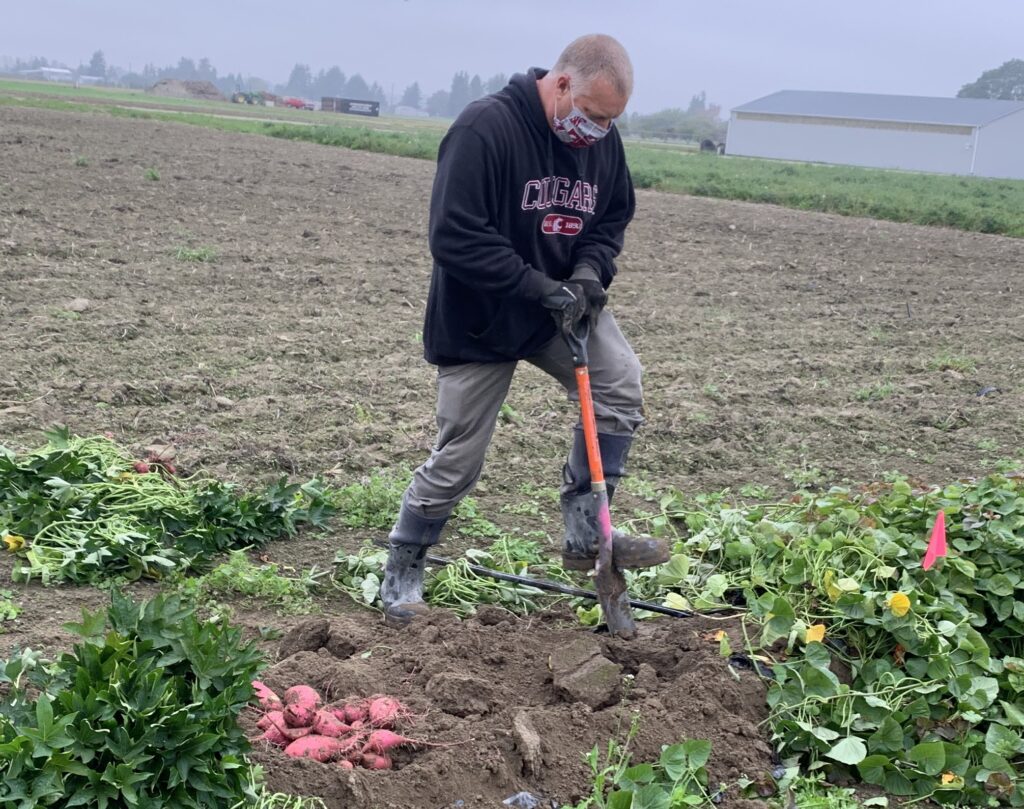
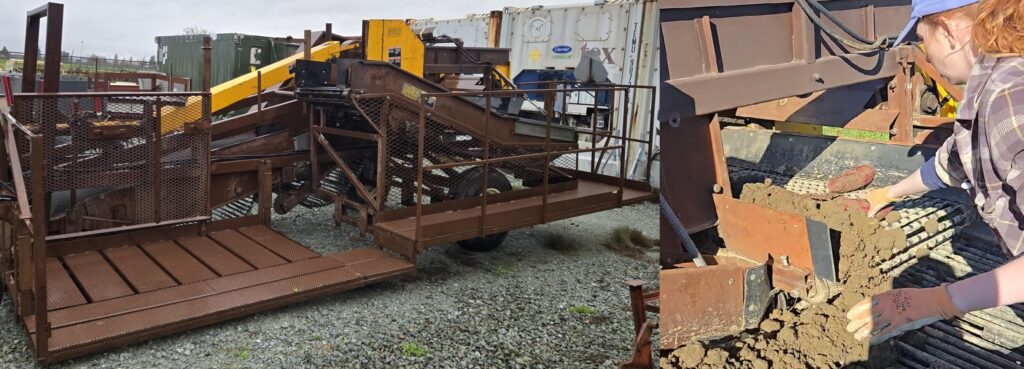
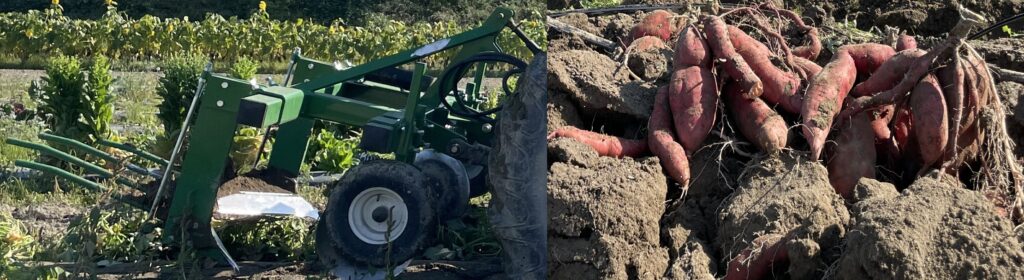
Sweetpotatoes can be harvested by hand with a shovel or fork (Figure 5). On a larger scale, a potato digger or mulch lifter can be used (Figure 6 and 7). When using a potato digger, set the depth as deep as possible, ideally 8 inches or more. Some sweetpotatoes will be deep in the soil so a deep setting is important for reducing damage to roots. Harvest with a potato digger may need to be done slightly earlier than hand harvesting—before major rain events in the late fall—to reduce soil compaction. A mulch lifter can be used to raise mulch and sweetpotato roots simultaneously. This could be a cost-effective alternative foer a potato digger for smaller scale farming operations.
Harvest Consideration
During harvest, minimize skinning and bruising the sweetpotatoes. Minor wounds during harvest are not a concern if roots are cured properly. Do not wash roots after harvest but brush off excess dirt.
Do not leave sweetpotatoes exposed to the hot sun for more than a few hours after harvest as this can increase moisture loss and susceptibility to decay during curing and storage (Woolfe 1992). Sweetpotatoes harvested from cold, wet soils or exposed to temperatures below 50 °F after harvest may be more susceptible to pathogens during storage, develop off-flavors, and/or develop permanently hard areas of the flesh that are not softened by cooking (Woolfe 1992).
Market Classes
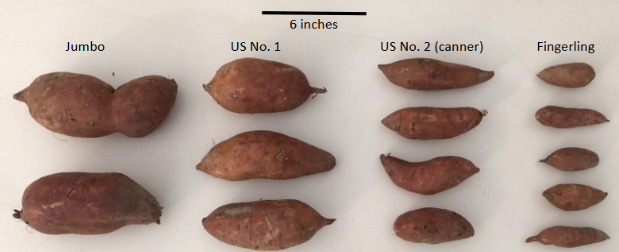
Sweetpotatoes are a perennial plant and the roots will continue to grow larger the longer and warmer the growing season. Growers may want to target specific root size classes for various markets and end uses (Figure 8).
Jumbo
Jumbo roots are the largest size class and are typically sold for processing. Jumbo roots have a diameter larger than 3 ½ inches and/or a length greater than 9 inches (USDA ARS 2005). Direct market farmers often want to minimize production of jumbo roots since they are less popular with direct market consumers. The production of jumbo roots can be minimized by using a narrower in-row plant spacing and/or harvesting earlier.
US no. 1
US no. 1 sweetpotato roots are the standard fresh market class of sweetpotato. They have a diameter between 1 ¾ and 3 ½ inches and a length between 3 and 9 inches (USDA ARS 2005).
US no. 2 (canner)
US no. 2 or canner sweetpotato roots have a diameter between 1 ½ and 2 ¼ inches and a length between 3 and 7 inches (USDA ARS 2005). At grocery stores, US no. 2 grade roots are often sold in microwavable bags of 4 to 6 roots. These sweetpotatoes are ideal for baking or steaming whole and are a nice size for individual servings.
Fingerling
Fingerling sweetpotatoes are smaller than US no. 2 sweetpotatoes, with a diameter of 1 to 1 ½ inches and a length of 2 to 4 inches. Fingerling sweetpotatoes can be sold in bags by weight or number. Fingerling sweetpotatoes cook faster, are less stringy, and have more tender skin than larger sweetpotatoes (Hoffman 2019). Fingerling sweetpotatoes can be steamed, baked, or roasted whole or chopped with the skins on. Fingerling sweetpotatoes do not store as well as larger roots, so they should be marketed and consumed soon after curing.
References
Bornt C. 2012. Final Report for LNE10-292: Improving the yield and quality of sweet potatoes grown in New York. WSARE. https://projects.sare.org/project-reports/lne10-292/.
DeVetter LW, Zhang H, Ghimire S, Watkinson S, Miles CA. 2017. Plastic biodegradable mulches reduce weeds and promote crop growth in day-neutral strawberry in Western Washington. HortScience. 52(12):1700–1706. https://doi.org/10.21273/HORTSCI12422-17.
Devi P, Perkins-Veazie P, Miles CA. 2020. Rootstock and plastic mulch effect on watermelon flowering and fruit maturity in a Verticillium dahliae infested field. HortScience. 55:1438-1445. https://doi.org/10.21273/HORTSCI15134-20.
Duque LO. 2020. Performance of sweetpotato varieties grown using black plastic mulch in Pennsylvania. HortTechnology. 30(6):797-802. https://doi.org/10.21273/HORTTECH04689-20.
Duque LO, Sánchez E, Pecota K, Yencho C. 2022. A win–win situation: Performance and adaptability of petite sweetpotato production in a temperate region. Horticulturae. 8(2):172. https://doi.org/10.3390/horticulturae8020172.
FAO. 2024. FAOSTAT: Crop and livestock products. https://www.fao.org/faostat/en/#data. [accessed 9 Dec 2024].
Felix J, Shock CC, Ishida JK, Feibert EBG, Saunders LD. 2013. Sweet potato cultivar performance and irrigation criteria for the Treasure Valley. Oregon State University Agricultural Experiment Station, Malheur Experiment Station Annual Report 2012, Department of Crop and Soil Science Ext/CrS 144. p. 121-131. https://agsci.oregonstate.edu/article/sweet-potato-cultivar-performance-and-irrigation-criteria-treasure-valley. [accessed 6 Feb 2025].
Gajanayake B, Raja Reddy K, Shankle MW. 2015. Quantifying growth and developmental responses of sweetpotato to mid- and late-season temperature. Agronomy. 107(5):1854–1862. https://doi.org/10.2134/agronj14.0545.
Ghimire S, Wszelaki AL, Moore JC, Inglis DA, Miles CA. 2018. The use of biodegradable mulches in pie pumpkin crop production in two diverse climates. HortScience. 53(3):288-294. https://doi.org/10.21273/HORTSCI12630-17.
Hammett LK. 1985. Refrigerated storage influence on sweet potato transplant viability and root yield. HortScience. 20:198-200.
Hoffman M. 2019. Fingerling sweet potatoes are the next “it” vegetable and we are fully on board. Epicurious. https://www.epicurious.com/ingredients/what-are-fingerling-sweet-potatoes-how-to-cook-them-article.
Lamont WJ. 1999. The use of different colored mulches for yield and earliness. University of Connecticut Integrated Pest Management. https://ipm.cahnr.uconn.edu/the-use-of-different-colored-mulches-for-yield-and-earliness/. [accessed 25 Jan 2024].
Lebot V. 2020. Tropical root and tuber crops: Cassava, sweet potato, yams and aroids (2nd ed). CABI, Wallingford, Oxfordshire, UK.
Manners R, van Etten J. 2018. Are agricultural researchers working on the right crops to enable food and nutrition security under future climates? Global Environmental Change. 53:182–194. https://doi.org/10.1016/j.gloenvcha.2018.09.010.
Mukhopadhyay SK, Chattopadhyay A, Chakraborty I, Bhattacharya I. 2011. Crops that feed the world 5. Sweetpotato. Sweetpotatoes for income and food security. Food Sec. 3:283–305. https://doi.org/10.1007/s12571-011-0134-3.
Nedunzhiyan M, Varma SP, Ray RC. 1998. Estimation of critical period of crop-weed competition in sweet potato (Ipomoea batatas L.). Advances in Horticultural Science. 12(2):101–104.
Novak B, Zutic I, Toth N, Dobricevic N. 2007. Sweet potato [Ipomoea batatas (L.) Lam] yield influenced by seedlings and mulching. Agriculturae Conspectus Scientificus. 72(4):357–359. https://hrcak.srce.hr/file/30363.
Schultheis JR, Walters SA, Adams DE, Estes EA. 1999. In-row plant spacing and date of harvest of `Beauregard’ sweetpotato affect yield and return on investment. HortScience. 34(7):1229–1233. https://doi.org/10.21273/HORTSCI.34.7.1229.
Seem JE, Creamer NG, Monks DW. 2003. Critical weed-free period for ‘Beauregard’ sweetpotato (Ipomoea batatas). Weed Technology. 17(4):686–695. https://doi.org/10.1614/WT02-089.
Shrestha S, Miles CA. 2022. Plastic mulch and in-row spacing effects on sweetpotato yield in Northwest Washington. HortTechnology. 32(2):241–251.
Sideman RG. 2015. Performance of sweetpotato cultivars grown using biodegradable black plastic mulch in New Hampshire. HortTechnology. 25(3):412-416. https://doi.org/10.21273/HORTTECH.25.3.412.
Smith T, Villordon A. 2016. Optimizing soil moisture and irrigation management. Louisiana State University Extension Publication 3235B. https://www.lsuagcenter.com/portals/communications/publications/publications_catalog/crops_livestock/commercial%20fruits%20and%20vegetables/improving_sweet_potato_production_efficiency_series/optimizing-soil-moisture-and-irrigation-management. [accessed 6 Feb 2025].
Stathers T, Carey E, Mwanga R, Njoku J, Malinga J, Njoku A, Gibson R, Namanda S. 2013. Everything you ever wanted to know about sweetpotato. Reaching agents of change ToT Manual 4. International Potato Center, Nairobi, Kenya. https://doi.org/10.4160/9789290604273.v4.
Szarvas A, Hodi MS, Monostori T. 2019. The effect of plant density on the yield of sweet potato. Acta Agraria Debreceniensis. 1:125-128. https://doi.org/10.34101/actaagrar/1/2383.
Thompson P, Smittle D, Hall M. 1992. Relationship of sweetpotato yield and quality to amount of irrigation. HortScience. 27(1):23–26.
Tofanelli MBD, Wortman SE. 2020. Benchmarking the agronomic performance of biodegradable mulches against polyethylene mulch film: a meta-analysis. Agronomy. 10(10):1618. https://doi.org/10.3390/agronomy10101618.
USDA ARS. 2005. United States standards for grades of sweet potatoes. https://www.ams.usda.gov/grades-standards/sweetpotatoes-grades-and-standards.
USDA NASS. 2022. National Agricultural Statistics Service Quick Stats [Database]. [accessed 5 Feb 2024].
Wadl PA, Campbell HT, Rutter WB, Williams LH, Murphey V, Culbreath J, Cutulle M. 2023. A sustainable approach for weed and insect management in sweetpotato: breeding for weed and insect tolerant/resistant clones. Weed Technology. 37(1):60-66. https://doi.org/10.1017/wet.2022.99.
Wees D, Seguin P, Boisclair J. 2016. Sweet potato production in a short-season area utilizing black plastic mulch: Effects of cultivar, in-row plant spacing, and harvest date on yield parameters. Can. J. Plant Sci. 96(1):139-147. https://doi.org/10.1139/cjps-2015-0150.
Woolfe J. 1992. Sweet potato: An untapped food resource. Cambridge University Press, Cambridge, Great Britain.

The information in this publication is based upon work that is supported by the U.S. Department of Agriculture, National Institute of Food and Agriculture, under award number 2022-38640-37490 through the Western Sustainable Agriculture Research and Education Program under project number WPDP25-003, and Hatch Project WNP0010 Accession 7005372. Any opinions, findings, conclusions, or recommendations expressed in this publication are those of the author(s) and are not meant to endorse any businesses or detract from any not listed.