Growing Sweetpotatoes in Western Washington
Sweetpotato Varieties
Authors: Laura Schulz1, Laurel Moulton2, Samantha Grieger2, Jordan White1, Jessica Weaver1, Srijana Shrestha3, Carol Miles1
Affiliation: Washington State University, 1Northwestern Washington Research and Extension Center, Mount Vernon; 2Extension; 3Oregon State University Extension
https://vegetables.wsu.edu/sweetpotato/
January 2026
Introduction
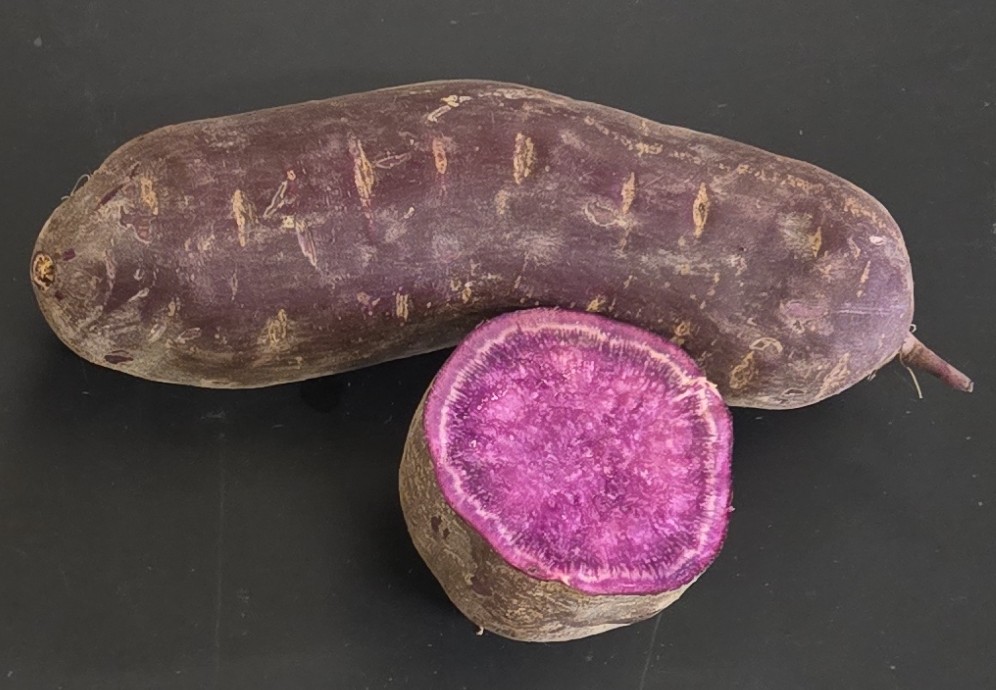
Selecting a suitable variety is important for growing sweetpotatoes (Ipomoea batatas) successfully in western Washington. Covington and Beauregard are the most widely grown sweetpotato varieties in the United States (Jennings et al. 2019; Stoddard et al. 2013). Beauregard has higher yield while Covington produces more uniform roots. However, there are many other varieties available with a wide range of characteristics, such as color, texture, flavor, yield, days to maturity, growth habit, and wireworm resistance (Figure 1).
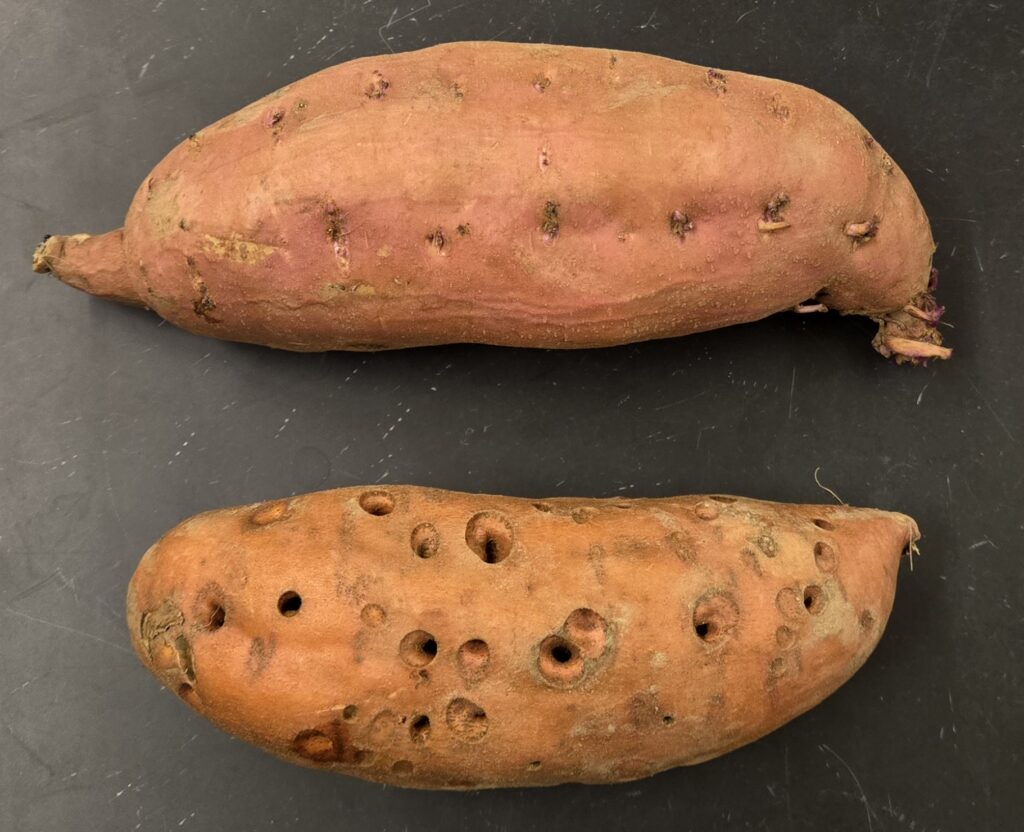
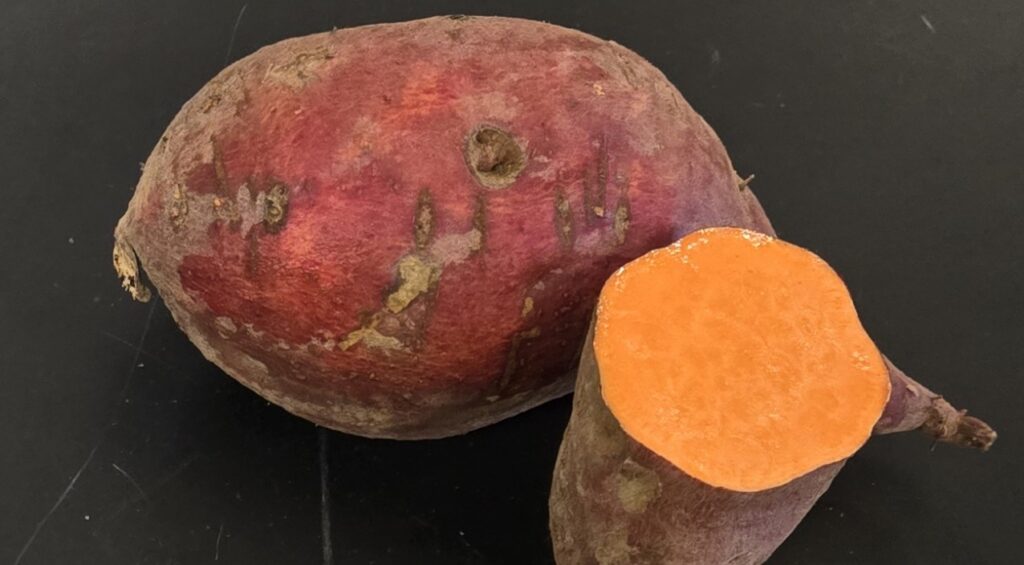
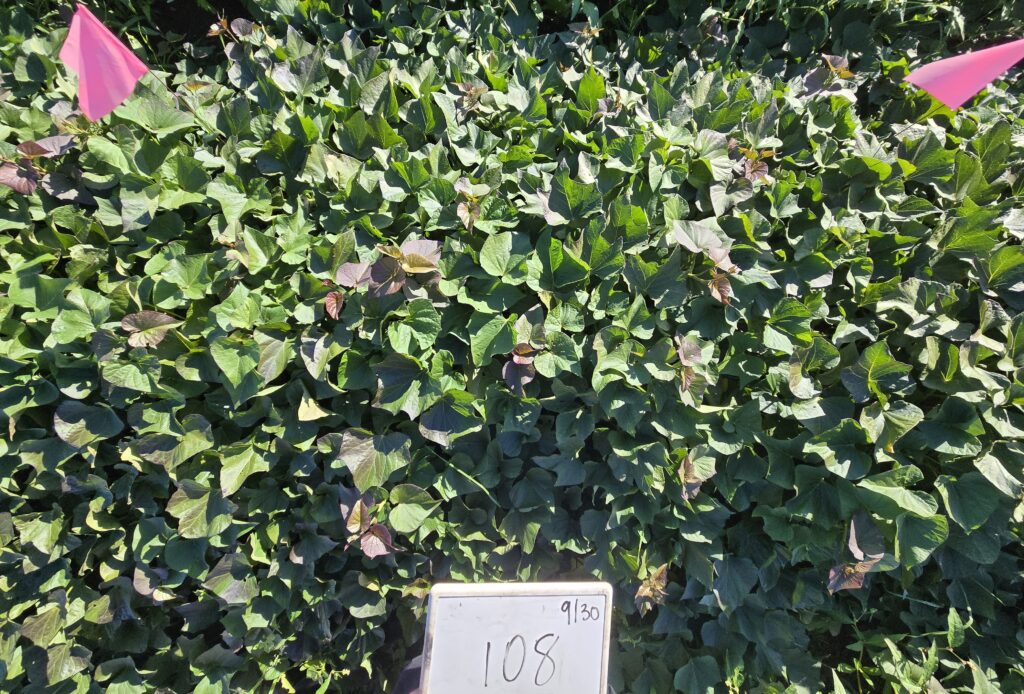
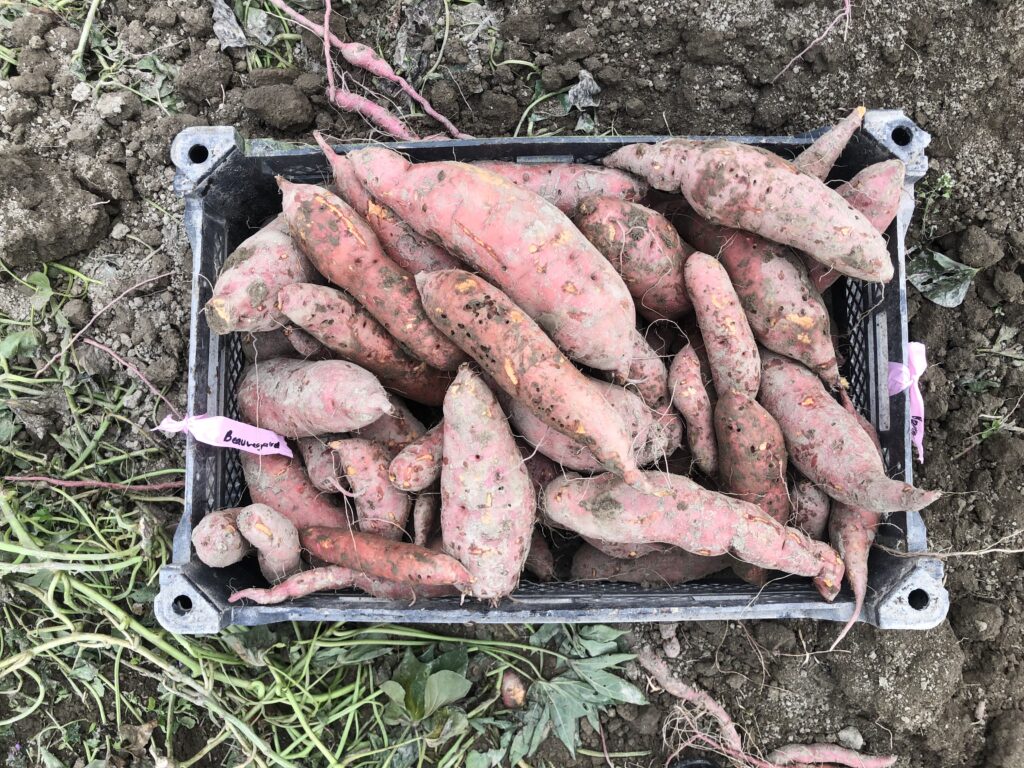
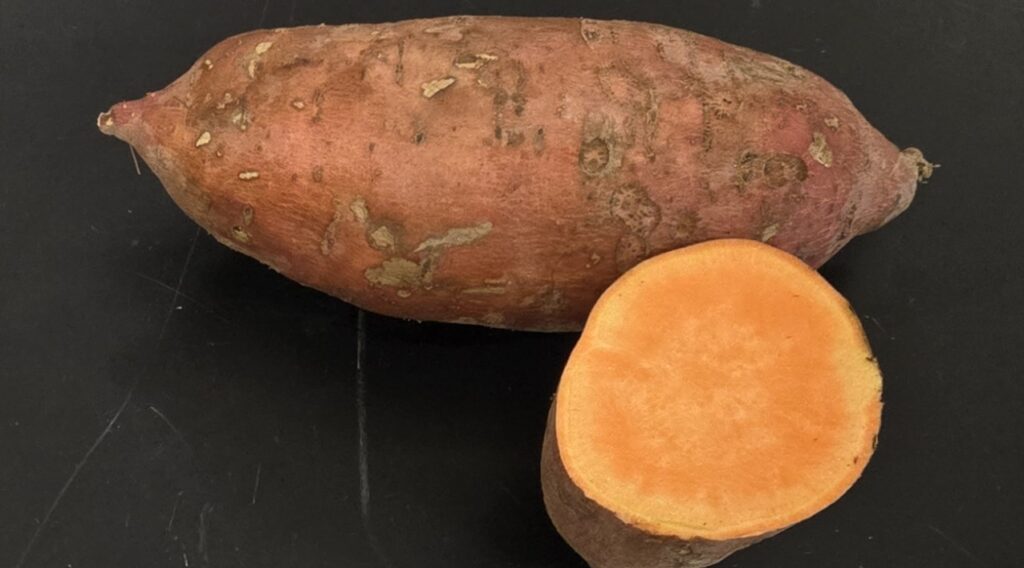
Table 1 summarizes characteristics of some sweetpotato varieties that are suitable for western Washington and Table 2 shows photos of select varieties.
Table 1. Sweetpotato varieties suitable for production in western Washington.
| Variety | Yield1 (lb/plant) | Yield1 (lb/100 ft row) | Flesh Color | Skin Color | Growth Habit | Wireworm Resistance2 | Eating Quality |
|---|---|---|---|---|---|---|---|
| Bayou Belle3 | 3.6 | 432 | Orange | Red | Extremely spreading | Intermediate resistance | Sweet, moist |
| Beauregard | 3.0 | 360 | Orange | Orange | Spreading | Susceptible | Sweet, moist |
| Cascade | 2.1 | 252 | White | Light rose | Spreading | Resistant | Lightly sweet, dry |
| Covington3 | 2.7 | 324 | Orange | Rose | Spreading | Susceptible | Sweet, moist |
| Georgia Jet | —4 | — | Orange | Rose | Spreading | — | Sweet, moist |
| Mahon Yam3 | —4 | — | Orange | Rose | Semi-erect | — | Sweet, moist |
| Monaco3 | 1.6 | 192 | Dark orange | Orange | Erect | Intermediate resistance | Sweet, moist |
| O’Henry3 | —4 | — | White | Light tan | Spreading | Susceptible | — |
| Orleans3 | 3.0 | 360 | Orange | Orange | Spreading | Susceptible | Sweet, moist |
| Sakura3 | 1.9 | 223 | Light purple | Purple red | Semi-erect | Susceptible | Dry, slightly bitter |
| Purple Majesty3 | 3.0 | 362 | Dark purple | Purple | Semi-erect | Intermediate resistance | Dry, slightly bitter |
| Purple Splendor3 | 3.0 | 356 | Purple | Purple | Semi-erect | Susceptible | Sweet, moist |
2Wireworm resistance data is from variety trials conducted at WSU NWREC in Mount Vernon, WA (Bayou Belle, Beauregard, Covington, Cascade, Monaco, and Orleans evaluated in 2023, 2024, and 2025; Sakura, Purple Majesty, and Purple Splendor evaluated only in 2025) and in South Carolina in 2010 and 2011 (O’Henry) (Jackson and Harrison 2013).
3Variety is protected under a US Plant Patent so slips should not be produced on-farm.
4Variety was not evaluated in trials in Mount Vernon, WA, but has been reported by farmers in western Washington to be suitable for the region.
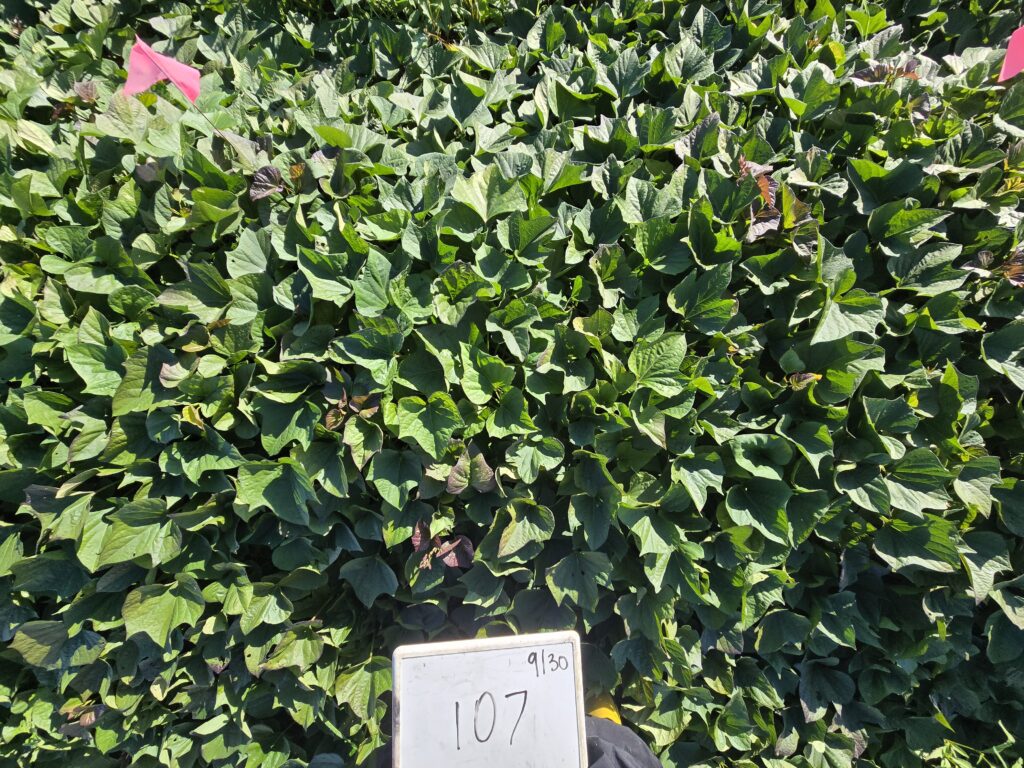
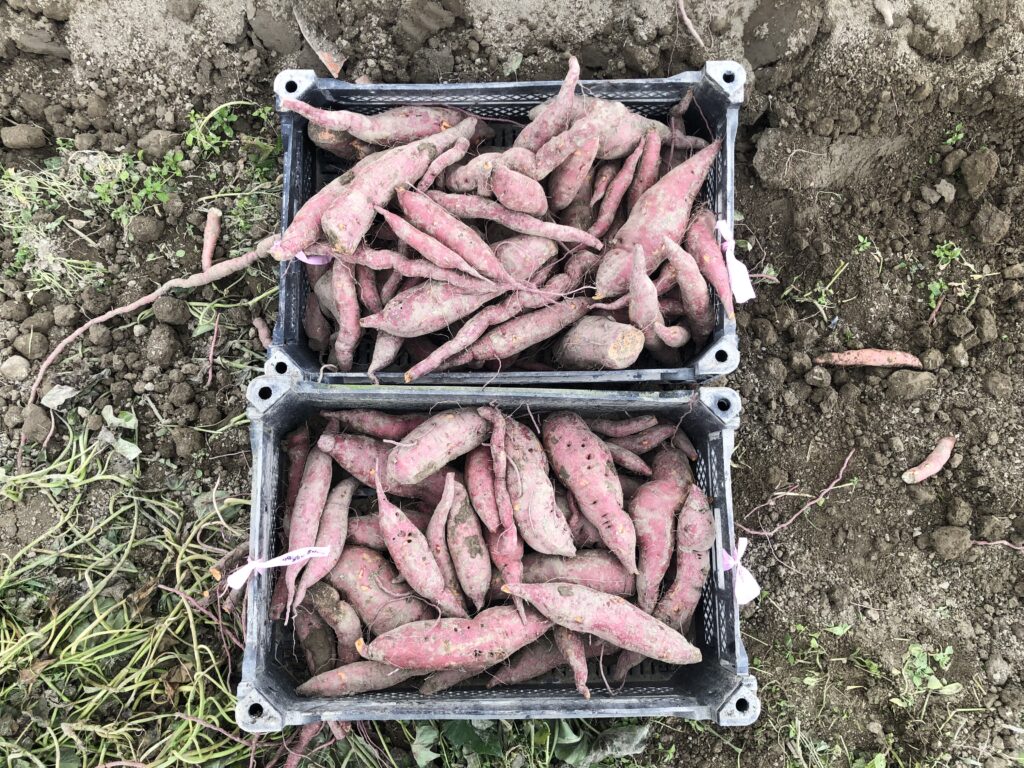
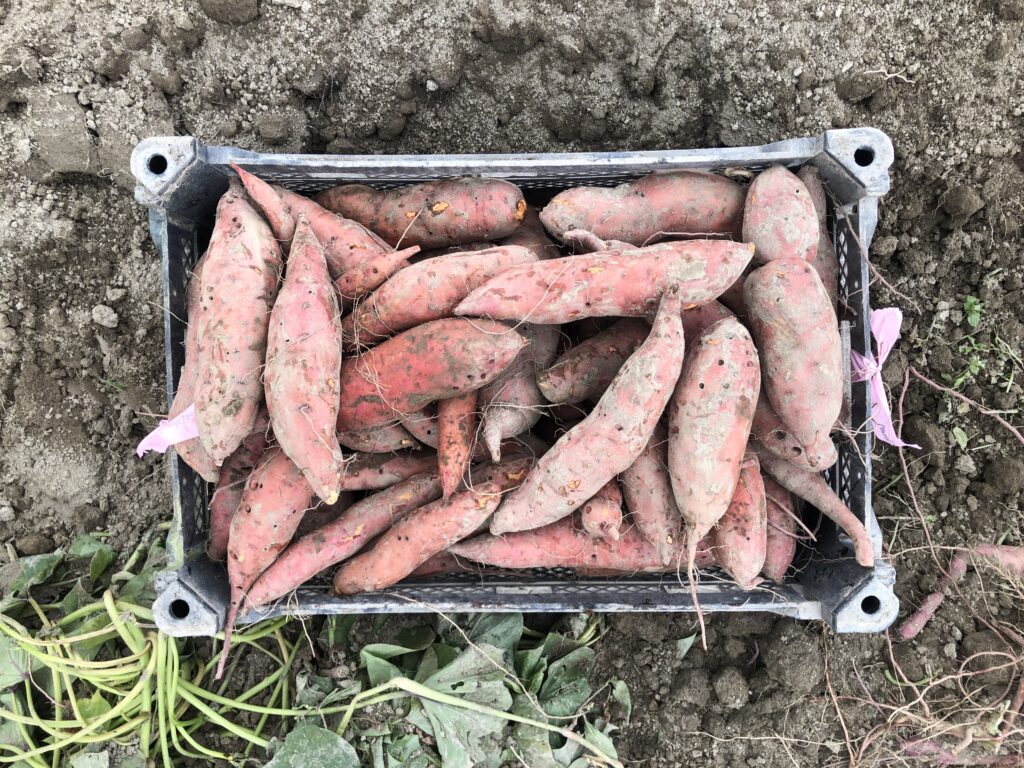
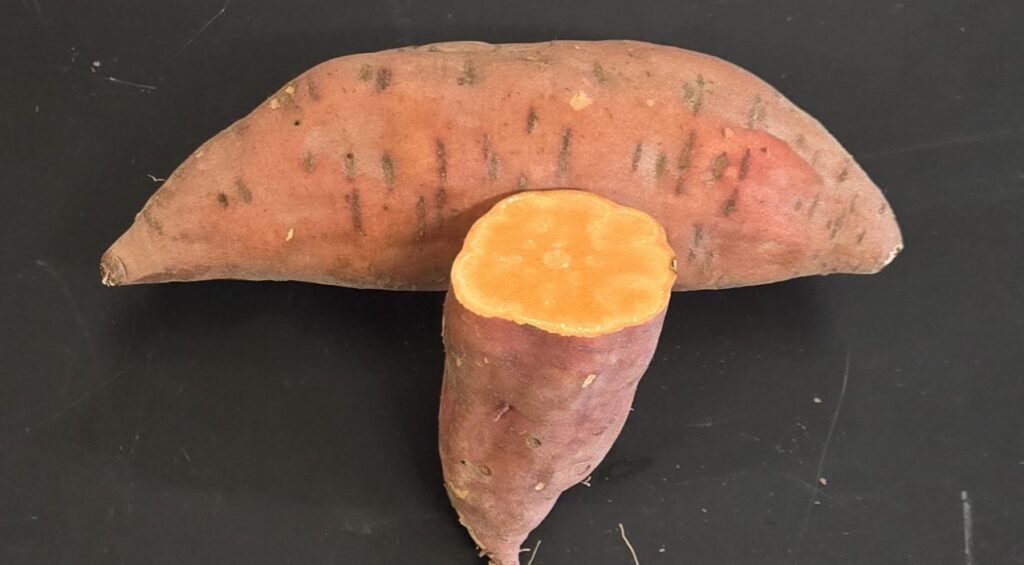
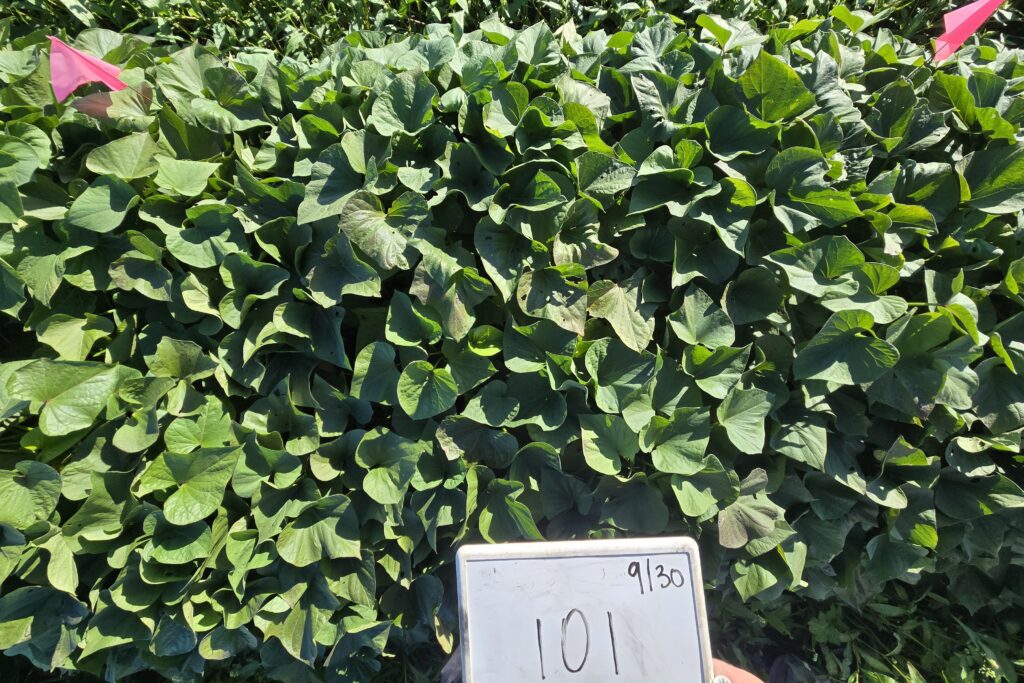
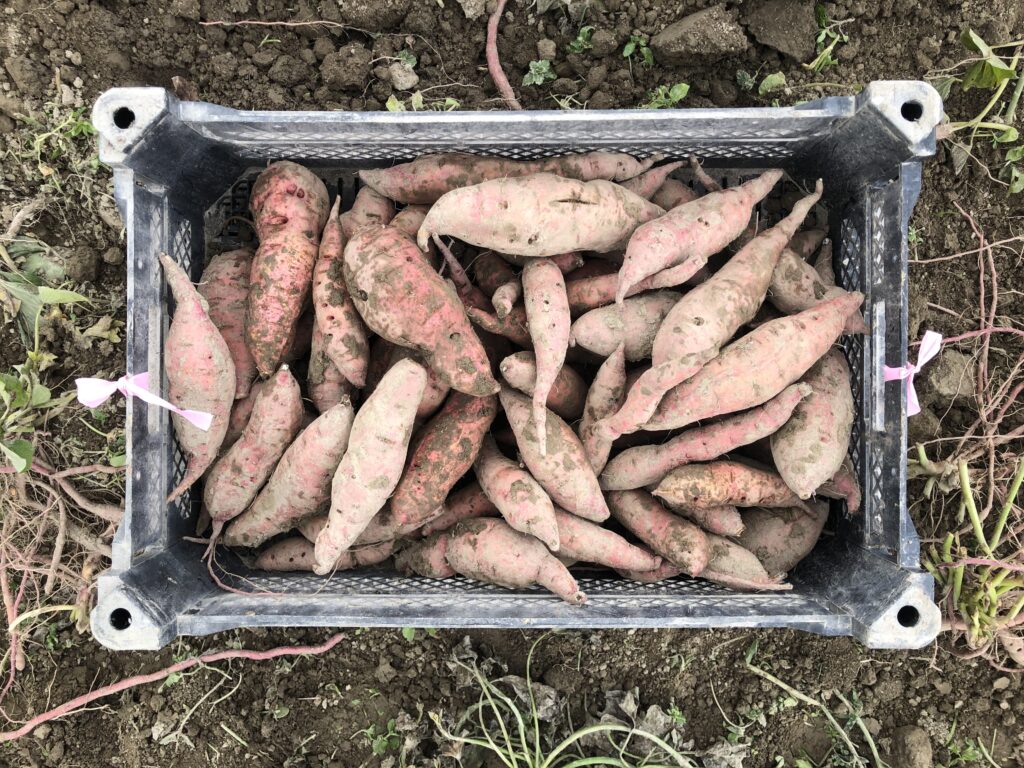
Table 2. Varieties suitable for production in western Washington based on field trials at WSU NWREC in Mount Vernon, WA. Photos of plants at harvest, yield of 10 plants, and washed root and cross section.
Variety
Plants at Harvest
Yield of 10 Plants
Skin and Flesh Color
Bayou Belle
Beauregard
Cascade
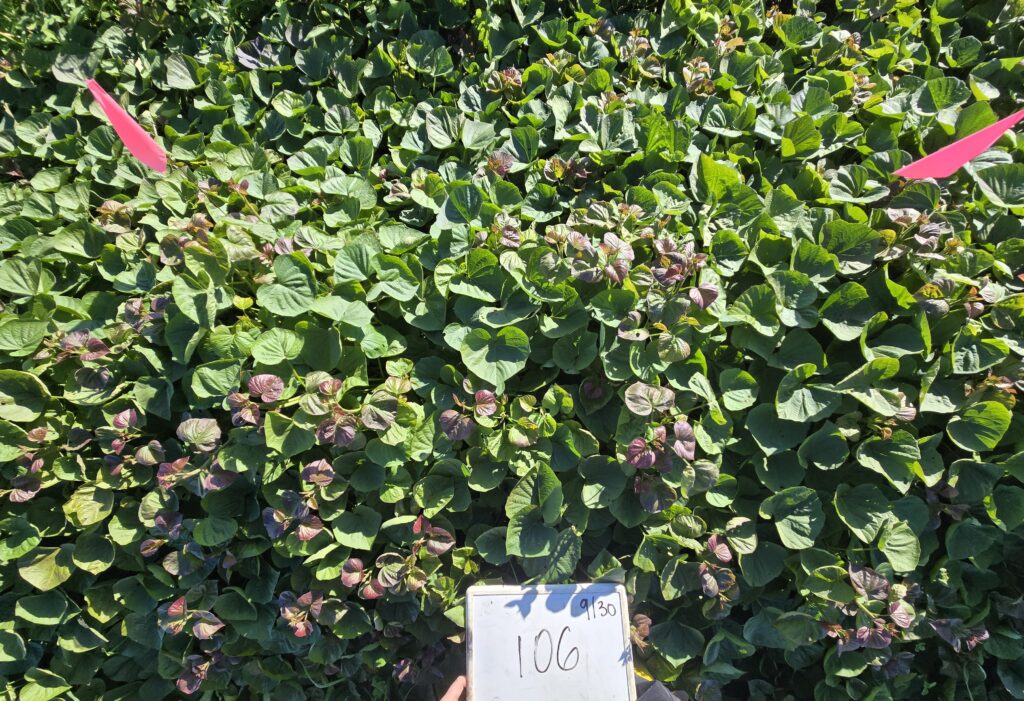
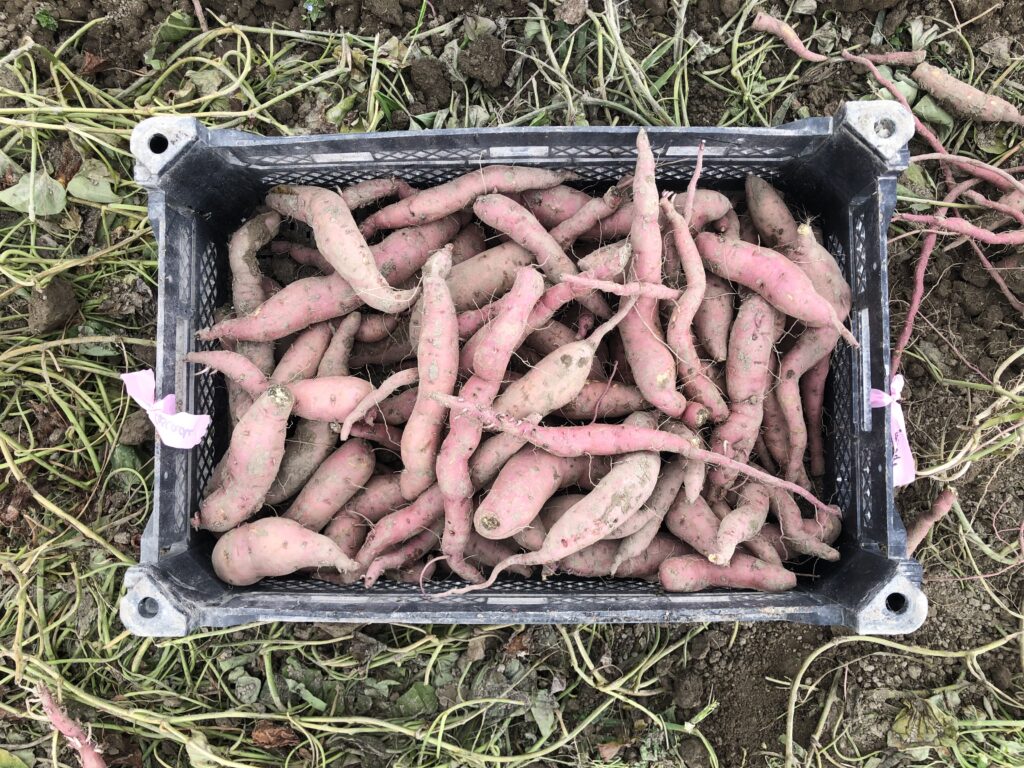
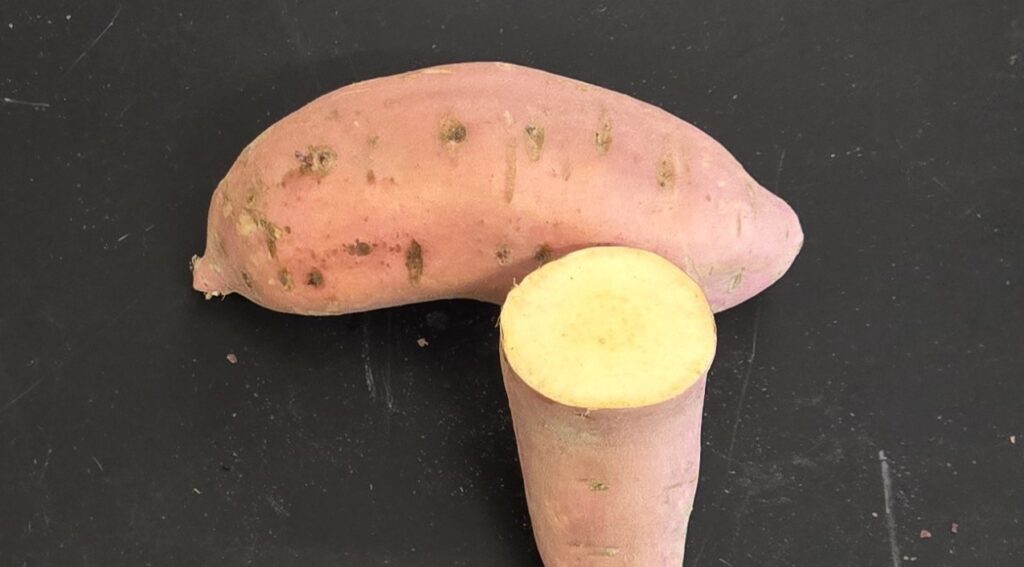
Covington
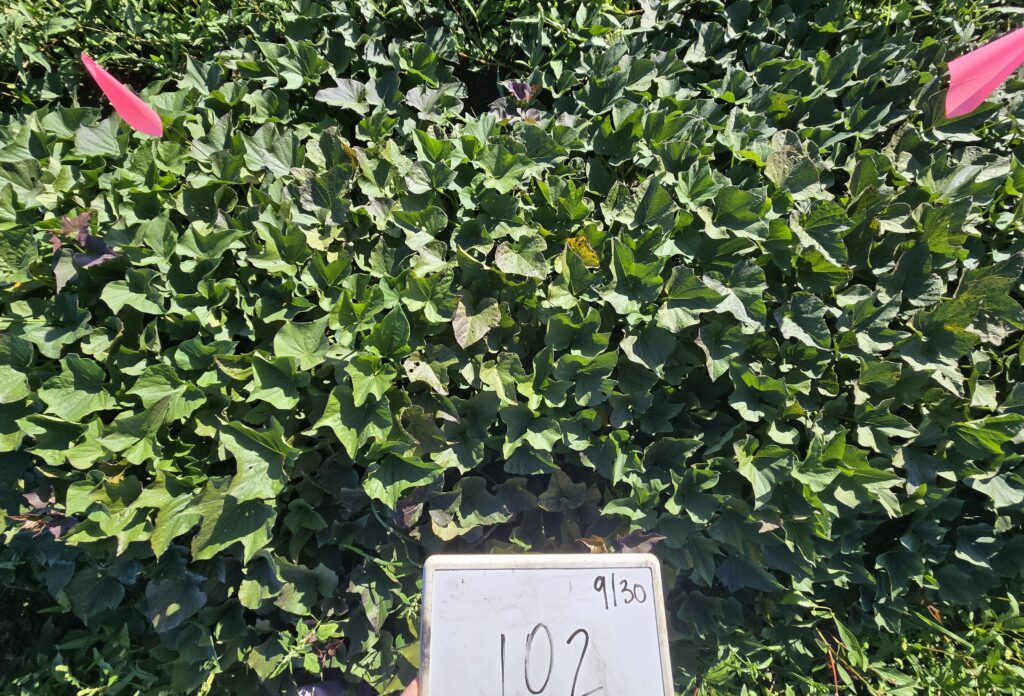
Monaco
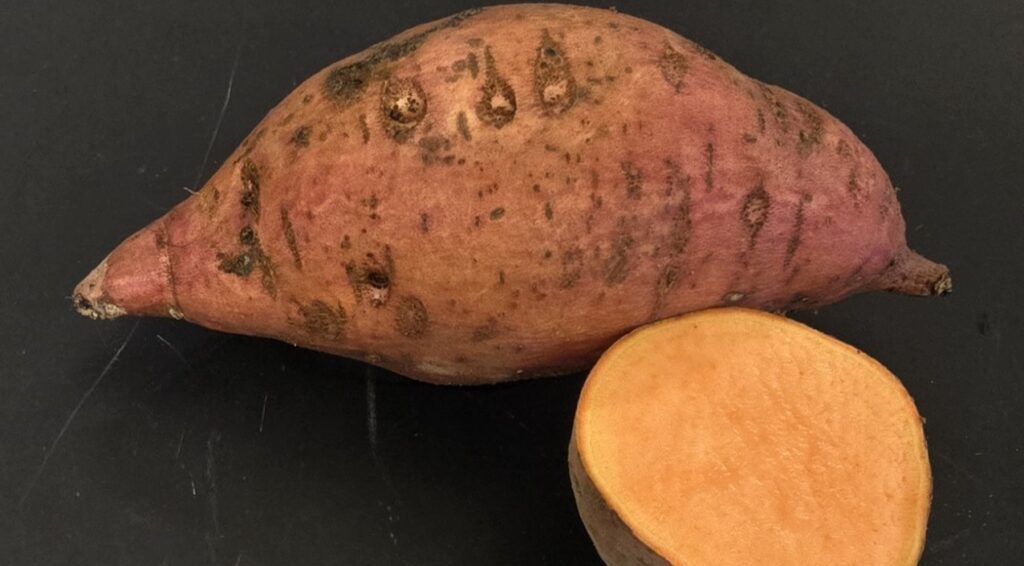
Orleans
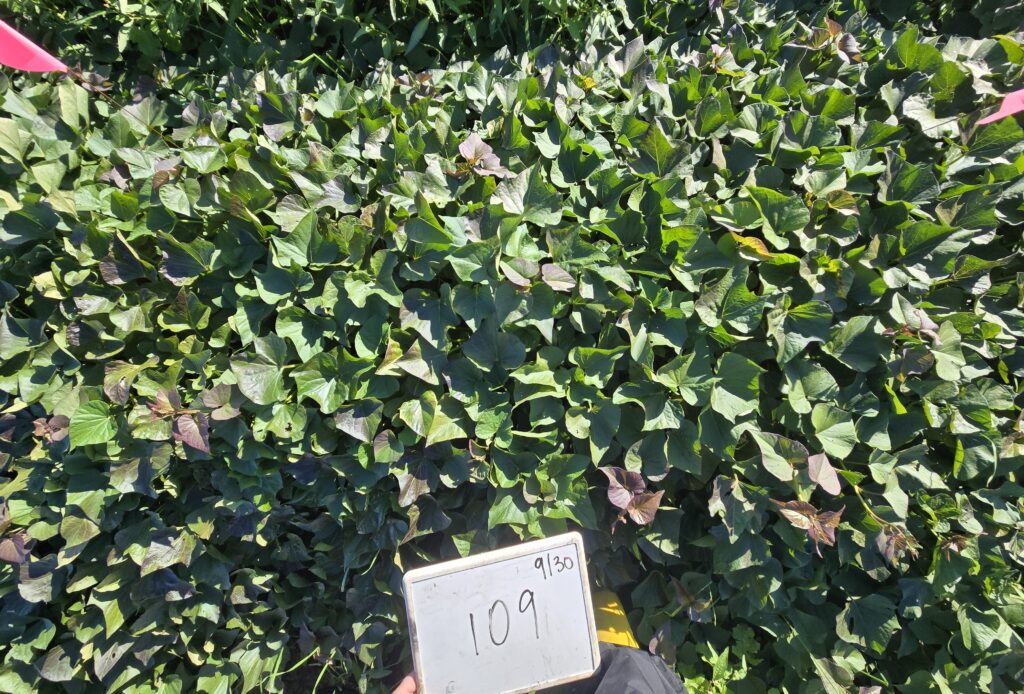
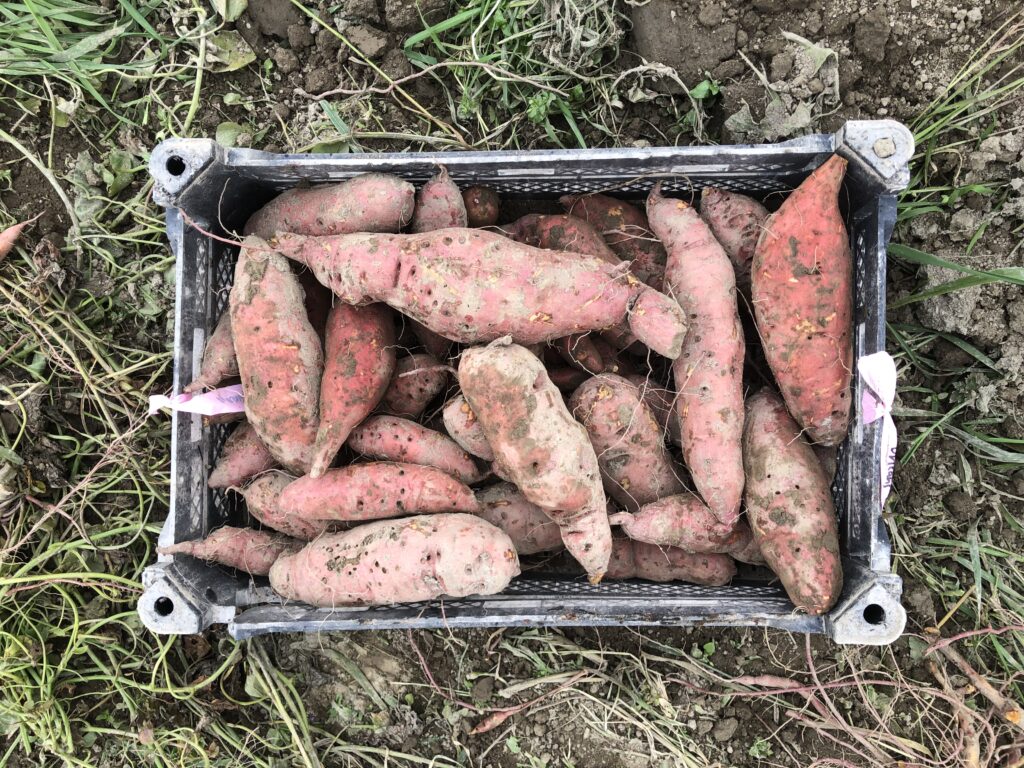
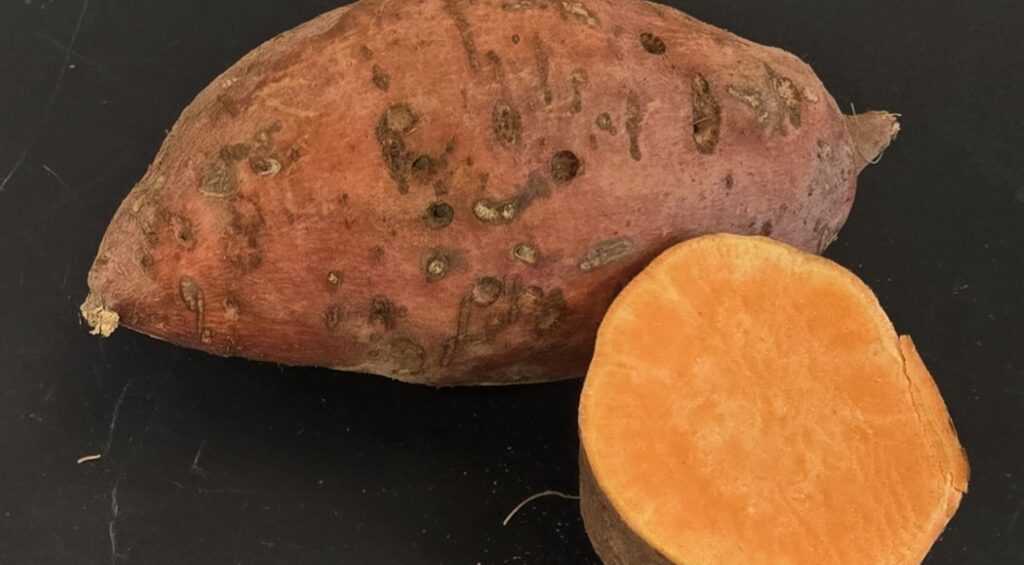
Sakura
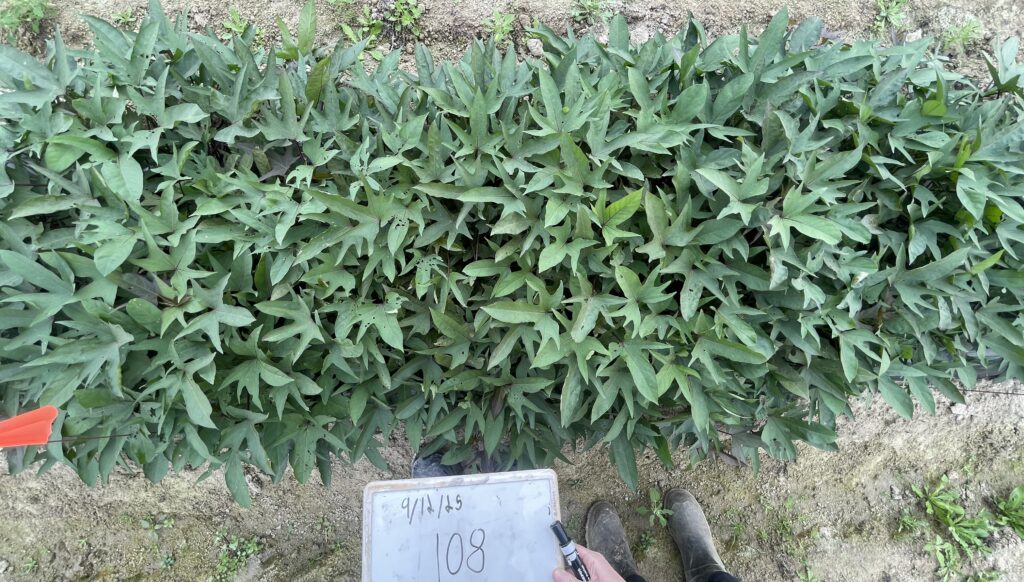
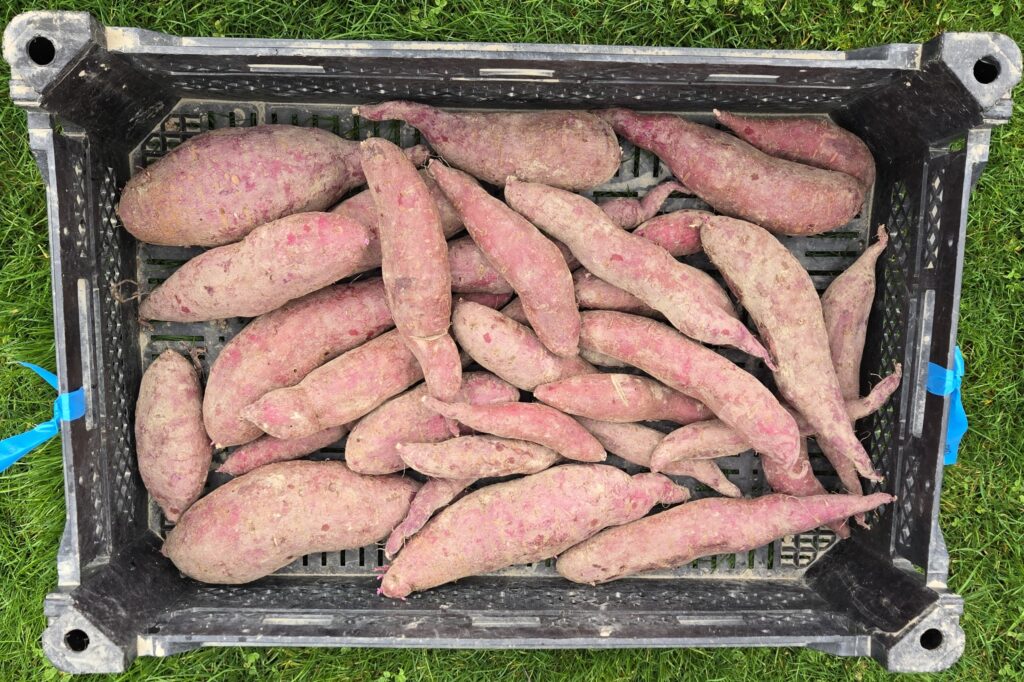
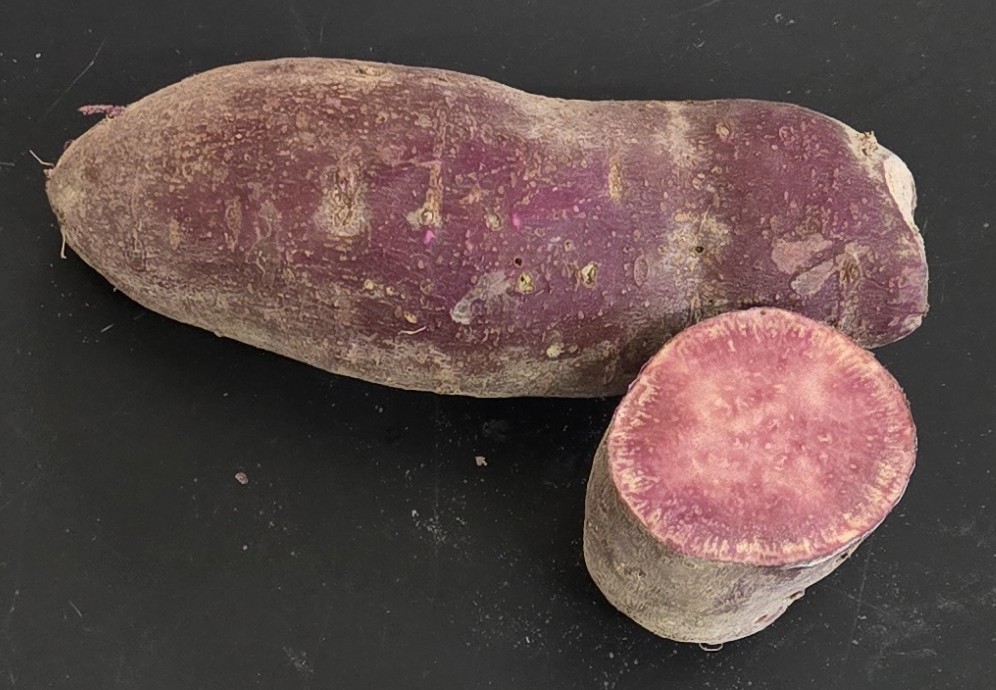
Purple Majesty
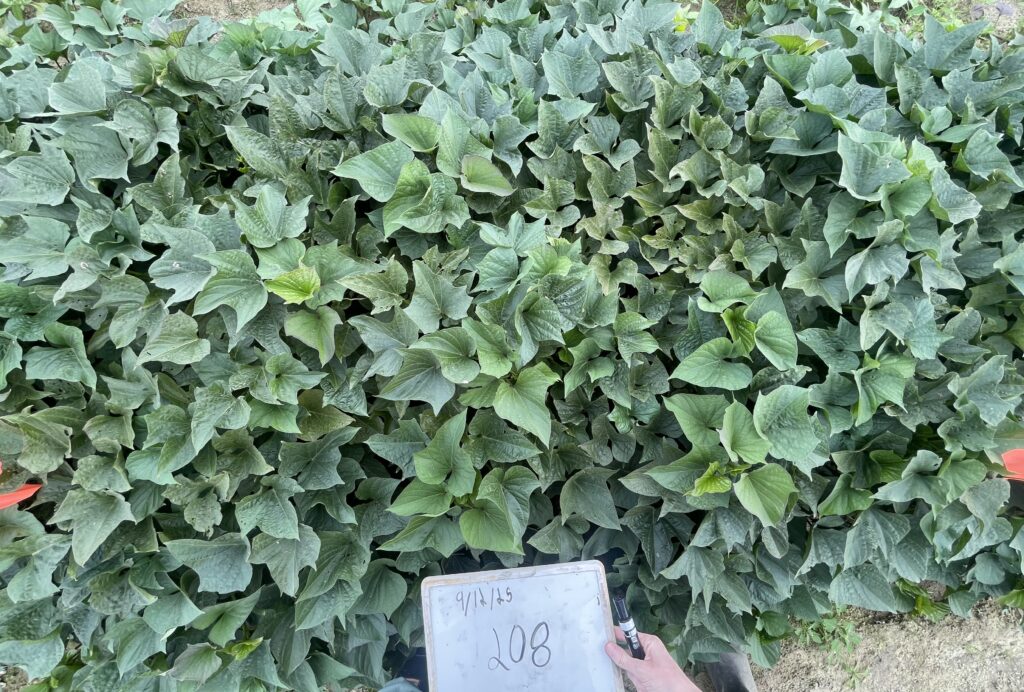
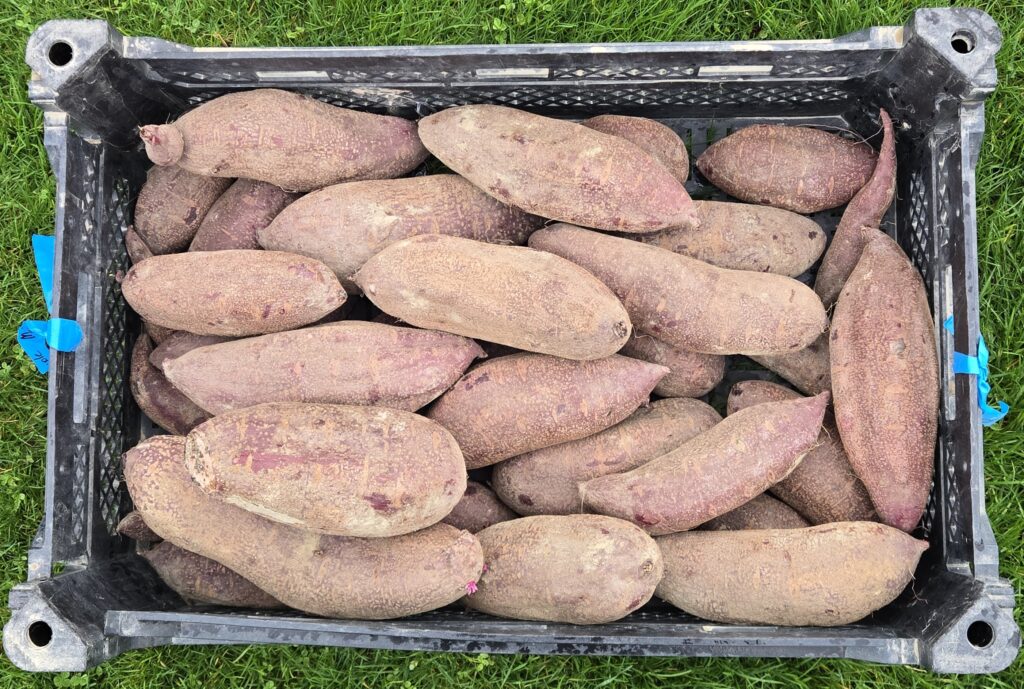
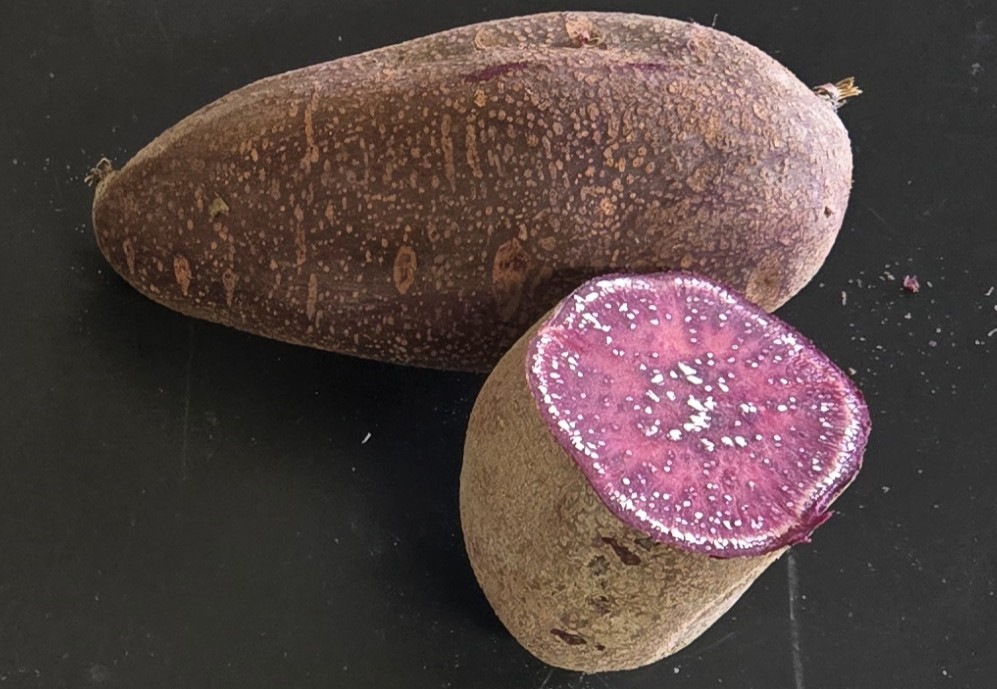
Purple Splendor
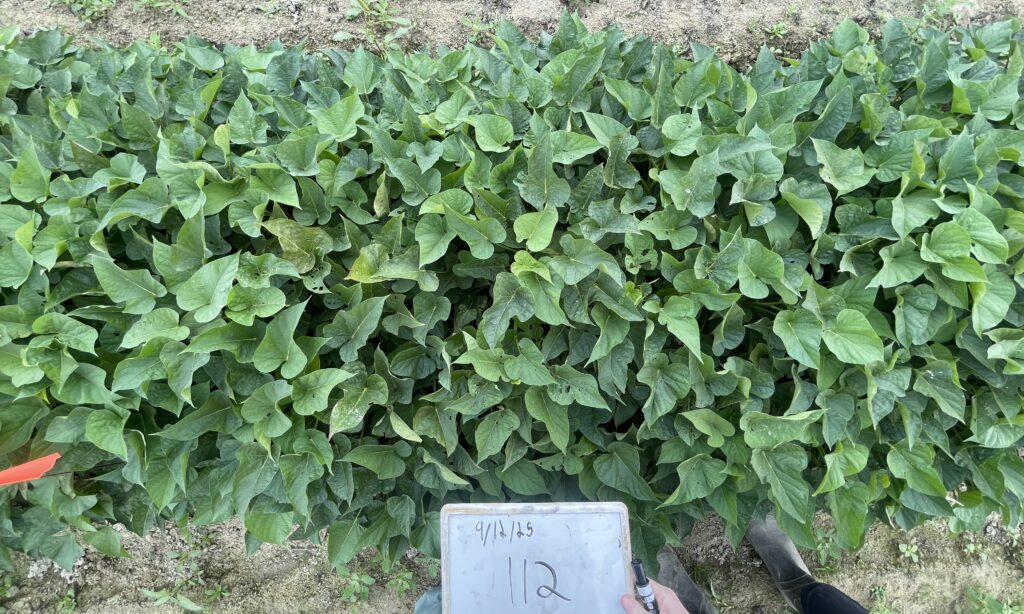
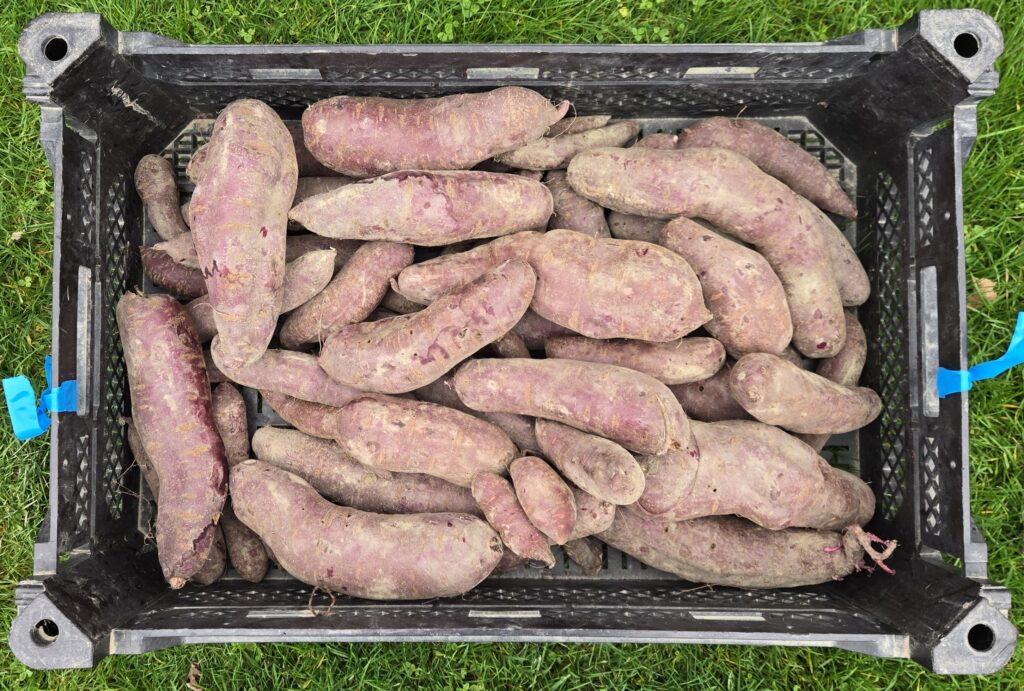
Days to Maturity
Sweetpotato varieties are classified by days required from transplanting to harvest: early maturing (90-100 days), mid-maturing (101-115 days) or late maturing (>115 days). In western Washington, early and mid-maturing varieties are recommended to ensure the roots have enough time to develop during the growing season.
Growth Habit
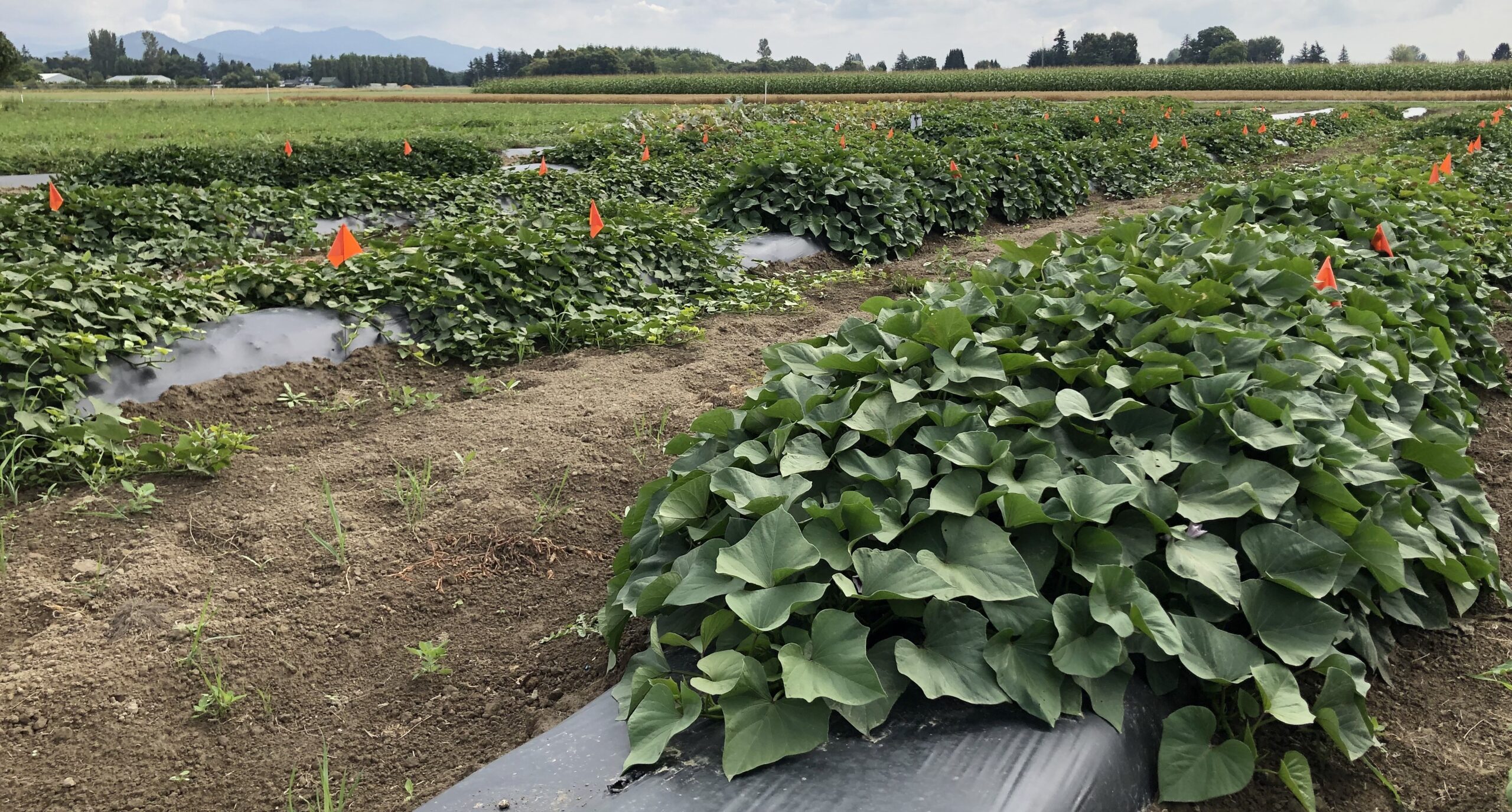
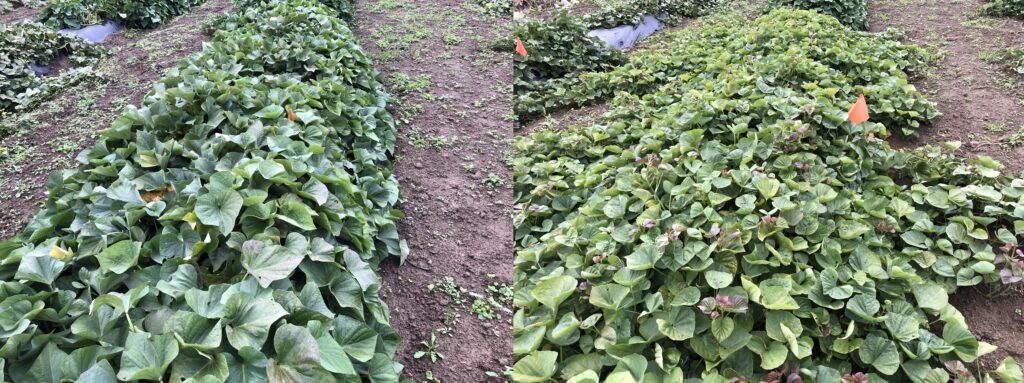
Sweetpotato varieties range from erect plants with short vines to spreading plants with long vines (Figure 2). Most sweetpotato varieties have spreading vines, but recent breeding efforts have focused on developing erect and semi-erect varieties. Erect varieties are usually described as “bush” or “bunch” varieties in seed catalogs. Erect varieties are better able to compete with weeds than spreading varieties (Wadl et al. 2023). Erect varieties develop more branches early in the season, resulting in earlier and denser soil cover. Between-row cultivation for weed control can be carried out until late August in this region with more erect varieties.
Insect and Disease Resistance
Sweetpotato breeding programs in the United States have developed varieties that are resistant to common insect pests and diseases. The primary insect pests of sweetpotatoes in the southeastern United States are the Wireworm-Diabrotica-Systena (WDS) complex, which includes wireworms (Agriotes spp.), banded and spotted cucumber beetles (Diabrotica spp.), and flea beetles (Systena spp.). Other pests include sweetpotato flea beetles (Chaetocnema confinis) and southern root knot nematodes (Meloidogyne incognita). The primary diseases are fusarium wilt (Fusarium oxysporum) and Streptomyces soil rot (Jennings et al. 2019). Of these insect pests and diseases, only wireworms have been reported as a major pest of sweetpotatoes in western Washington.
Eating Quality
Sweetpotato varieties can differ significantly in their eating quality. This includes flavor, which ranges from sweet to bitter, and texture, ranging from moist to dry. Usually, orange fleshed varieties are sweet and moist, while purple flesh varieties tend to be bitter and dry. Cooking methods such as baking, boiling, and steaming can impact sweetpotato flavor and texture. Baking is common with orange fleshed varieties as it enhances their sweetness and helps maintain a moist texture. Boiling and steaming can leach bitterness, so they are commonly used for purple varieties.
References
Jackson M, Harrison H. 2013. Insect resistance in traditional and heirloom sweetpotato varieties. Journal of Economic Entomology. 106(3):1456-1462. https://doi.org/10.1603/EC12396.
Jennings K, Quesada-Ocampo L, Schultheis J, Woodley A, Yencho C, Pecota K, Huseth A, Smith SC, Boyette M. 2019. North Carolina organic commodities production guide: Crop production management – sweetpotatoes. NC State Extension. https://content.ces.ncsu.edu/north-carolina-organic-commodities-production-guide/chapter-8-crop-production-management-sweetpotatoes.
Stoddard S, Davis M, Cantwell M. 2013. Sweetpotato production in California. Univ. of California Agr. and Natural Resources ANR. 7237. https://escholarship.org/uc/item/8jb2v95w.
Wadl PA, Campbell HT, Rutter WB, Williams LH, Murphey V, Culbreath J, Cutulle M. 2023. A sustainable approach for weed and insect management in sweetpotato: breeding for weed and insect tolerant/resistant clones. Weed Technology. 37(1):60-66. https://doi.org/10.1017/wet.2022.99.

The information in this publication is based upon work that is supported by the U.S. Department of Agriculture, National Institute of Food and Agriculture, under award number 2022-38640-37490 through the Western Sustainable Agriculture Research and Education Program under project number WPDP25-003, and Hatch Project WNP0010 Accession 7005372. Any opinions, findings, conclusions, or recommendations expressed in this publication are those of the author(s) and are not meant to endorse any businesses or detract from any not listed.