Using Sweetpotato Greens
Using Sweetpotato Greens: Cooking Methods and Recipes
Authors: Laura Schultz, Jordan White, Carol Miles.
Affiliation: Washington State University Northwestern Washington Research and Extension Center
Sweetpotato
Introduction
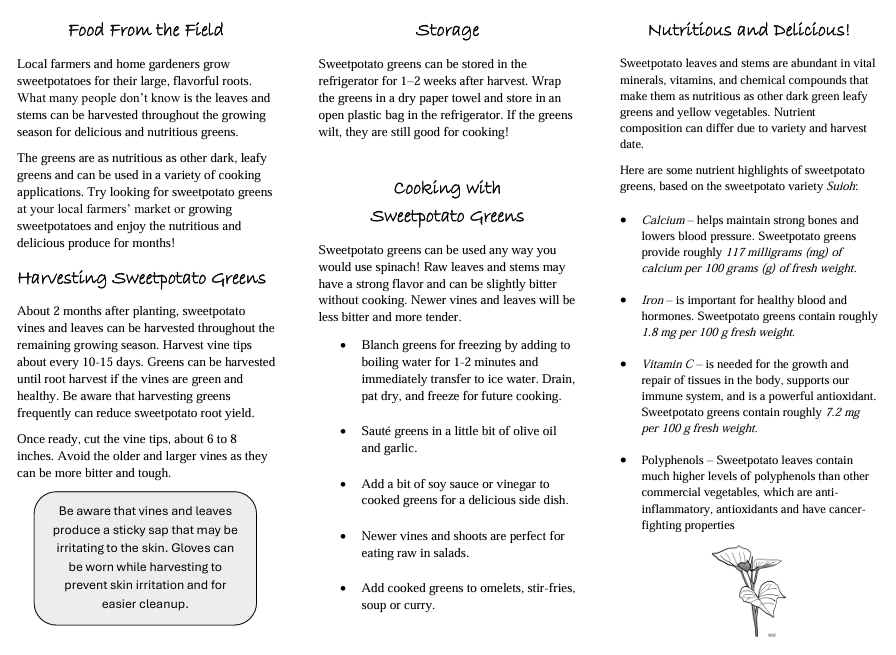
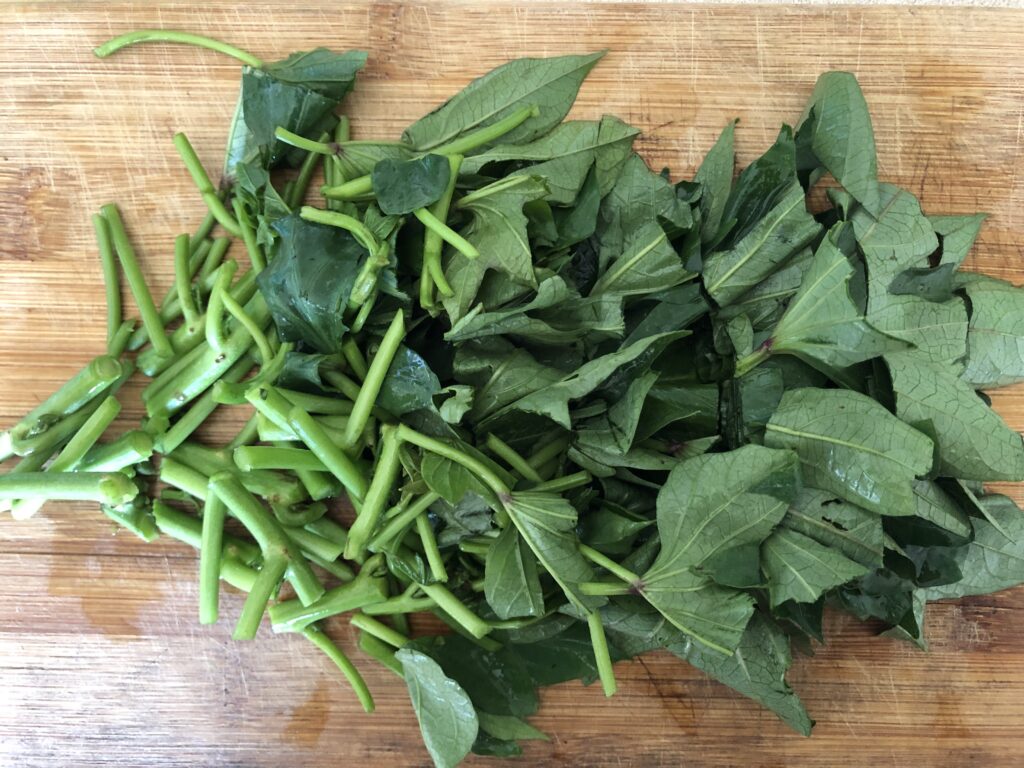
Local farmers and home gardeners grow sweetpotatoes for their large, flavorful roots. What many people don’t know is the leaves and stems can be harvested throughout the growing season for delicious and nutritious greens. The greens are as nutritious as other dark, leafy greens and can be used in a variety of cooking applications. Try looking for sweetpotato greens at your local farmers’ market or growing sweetpotatoes and enjoy the nutritious and delicious produce for months!
Nutritional Benefits
Sweetpotato leaves and stems are abundant in vital minerals, vitamins, and chemical compounds that make them as nutritious as other dark green leafy greens and yellow vegetables. Nutrient composition can differ due to variety and harvest date.
Here are some nutrient highlights of sweetpotato greens, based on the sweetpotato variety Suioh:
- Calcium – helps maintain strong bones and lowers blood pressure. Sweetpotato greens provide roughly 117 milligrams (mg) of calcium per 100 grams (g) of fresh weight.
- Iron – is important for healthy blood and hormones. Sweetpotato greens contain roughly 1.8 mg per 100 g fresh weight.
- Vitamin C – is needed for the growth and repair of tissues in the body, supports our immune system, and is a powerful antioxidant. Sweetpotato greens contain roughly 7.2 mg per 100 g fresh weight.
- Polyphenols – Sweetpotato leaves contain much higher levels of polyphenols than other commercial vegetables, which are anti-inflammatory, antioxidants and have cancer fighting properties
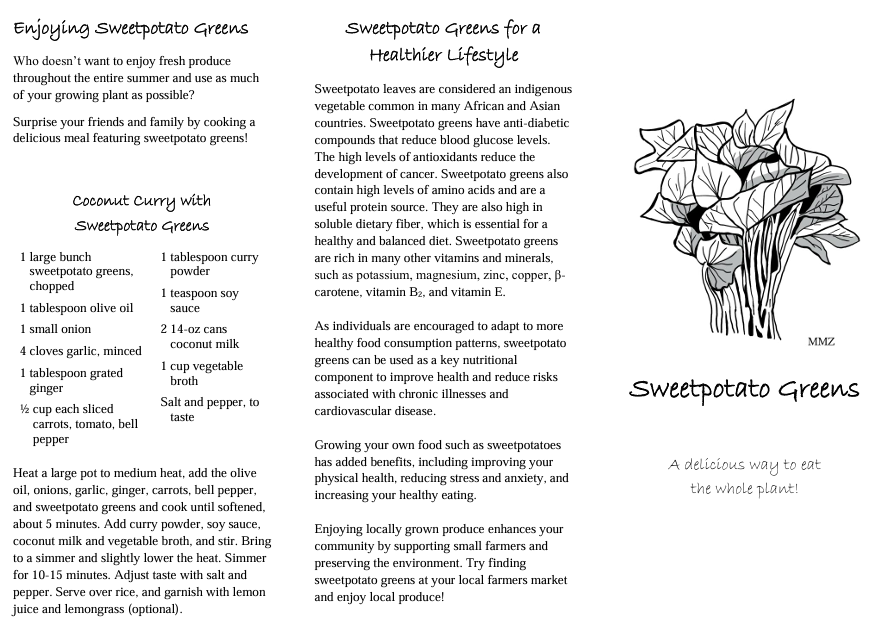
Sweetpotato leaves are considered an indigenous vegetable common in many African and Asian countries. Sweetpotato greens have anti-diabetic compounds that reduce blood glucose levels. The high levels of antioxidants reduce the development of cancer. Sweetpotato greens also contain high levels of amino acids and are a useful protein source. They are also high in soluble dietary fiber, which is essential for a healthy and balanced diet. Sweetpotato greens are rich in many other vitamins and minerals, such as potassium, magnesium, zinc, copper, β carotene, vitamin B2, and vitamin E.
As individuals are encouraged to adapt to more healthy food consumption patterns, sweetpotato greens can be used as a key nutritional component to improve health and reduce risks associated with chronic illnesses and cardiovascular disease.
Growing your own food such as sweetpotatoes has added benefits, including improving your physical health, reducing stress and anxiety, and increasing your healthy eating.
Enjoying locally grown produce enhances your community by supporting small farmers and preserving the environment. Try finding sweetpotato greens at your local farmers market and enjoy local produce!
Storage
Sweetpotato greens can be stored in the refrigerator for 1–2 weeks after harvest. Wrap the greens in a dry paper towel and store in an open plastic bag in the refrigerator. If the greens wilt, they are still good for cooking.
Cooking Methods
Sweetpotato greens can be used any way you would use spinach! Raw leaves and stems may have a strong flavor and can be slightly bitter without cooking. Newer vines and leaves will be less bitter and more tender.
- Blanch greens for freezing by adding to boiling water for 1-2 minutes and immediately transfer to ice water. Drain, pat dry, and freeze for future cooking.
- Sauté greens in a little bit of olive oil and garlic.
- Add a bit of soy sauce or vinegar to cooked greens for a delicious side dish.
- Newer vines and shoots are perfect for eating raw in salads.
- Add cooked greens to omelets, stir-fries, soup or curry.
Recipes
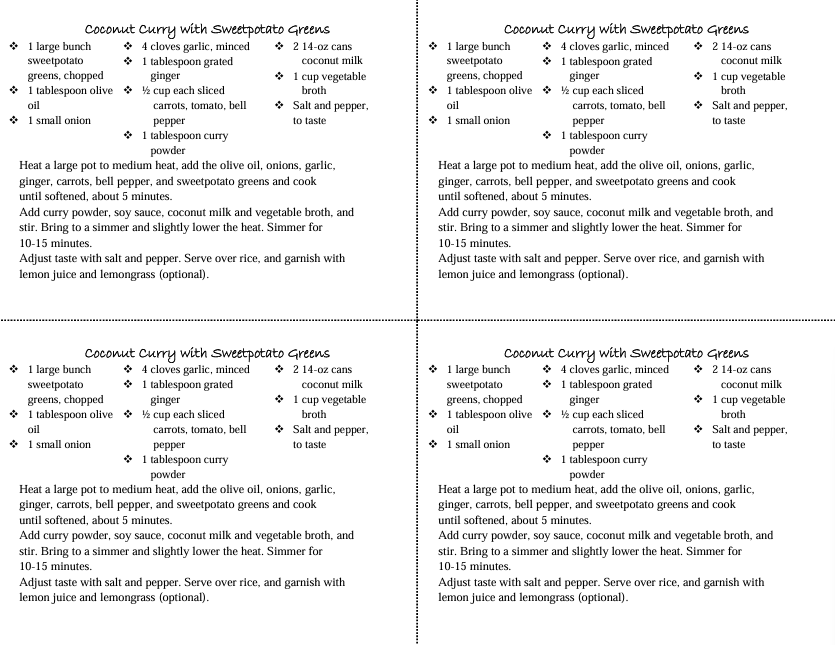
Coconut Curry with Sweetpotato Greens
- 1 large bunch sweetpotato greens, chopped
- 1 tablespoon olive oil
- 1 small onion
- 4 cloves garlic, minced
- 1 tablespoon grated ginger
- ½ cup each sliced carrots, tomato, bell pepper
- 1 tablespoon curry powder
- 1 teaspoon soy sauce
- 2 14-oz cans coconut milk
- 1 cup vegetable broth
- Salt and pepper, to taste
Heat a large pot to medium heat, add the olive oil, onions, garlic, ginger, carrots, bell pepper, and sweetpotato greens and cook until softened, about 5 minutes. Add curry powder, soy sauce, coconut milk and vegetable broth, and stir. Bring to a simmer and slightly lower the heat. Simmer for 10-15 minutes. Adjust taste with salt and pepper. Serve over rice, and garnish with lemon juice and lemongrass (optional).
Share
See the example below for a simple double-sided brochure or recipe cards that can be shared with others!